The Comprehensive Guide to Production Systems: MRP vs MES Explained in Detail
TL;DR – MRP vs MES
Understanding the distinction between an MRP and an MES is pivotal for any production facility looking to optimize its operations. A manufacturing resource planning system focuses on what to produce, when to produce it, and what materials are needed (often handling material planning). In contrast, a mes manufacturing execution system operates on the shop floor in real-time to execute those plans and manage the exact “how” of production. While navigating the complex landscape of erp vs mrp vs mes, organizations must recognize that an mrp planning system schedules the future, whereas a cloud based manufacturing execution system manages the immediate present, bridging the gap between strategic planning and physical execution. Many businesses seek a unified approach by hiring a consultant erp or a custom erp development company to seamlessly integrate these layers.
1. Introduction to the Manufacturing Digital Landscape
In today’s hyper-competitive industrial ecosystem, the convergence of software and shop floor operations dictates operational success. The central debate often revolves around the core systems that drive production efficiency. Whether you are dealing with a classic mrp planning system or exploring the latest mes manufacturing execution system news, understanding how these systems interplay is crucial.
Many manufacturers start their digital transformation journey by asking: what is mrp in supply chain management? They then progress to understanding the full manufacturing resource planning meaning. However, to achieve true operational excellence, recognizing the difference between mrp and erp, and subsequently how an MES fits into this triad, is vital.
2. Deep Dive: Decoding MRP (Material Requirements Planning & Manufacturing Resource Planning)
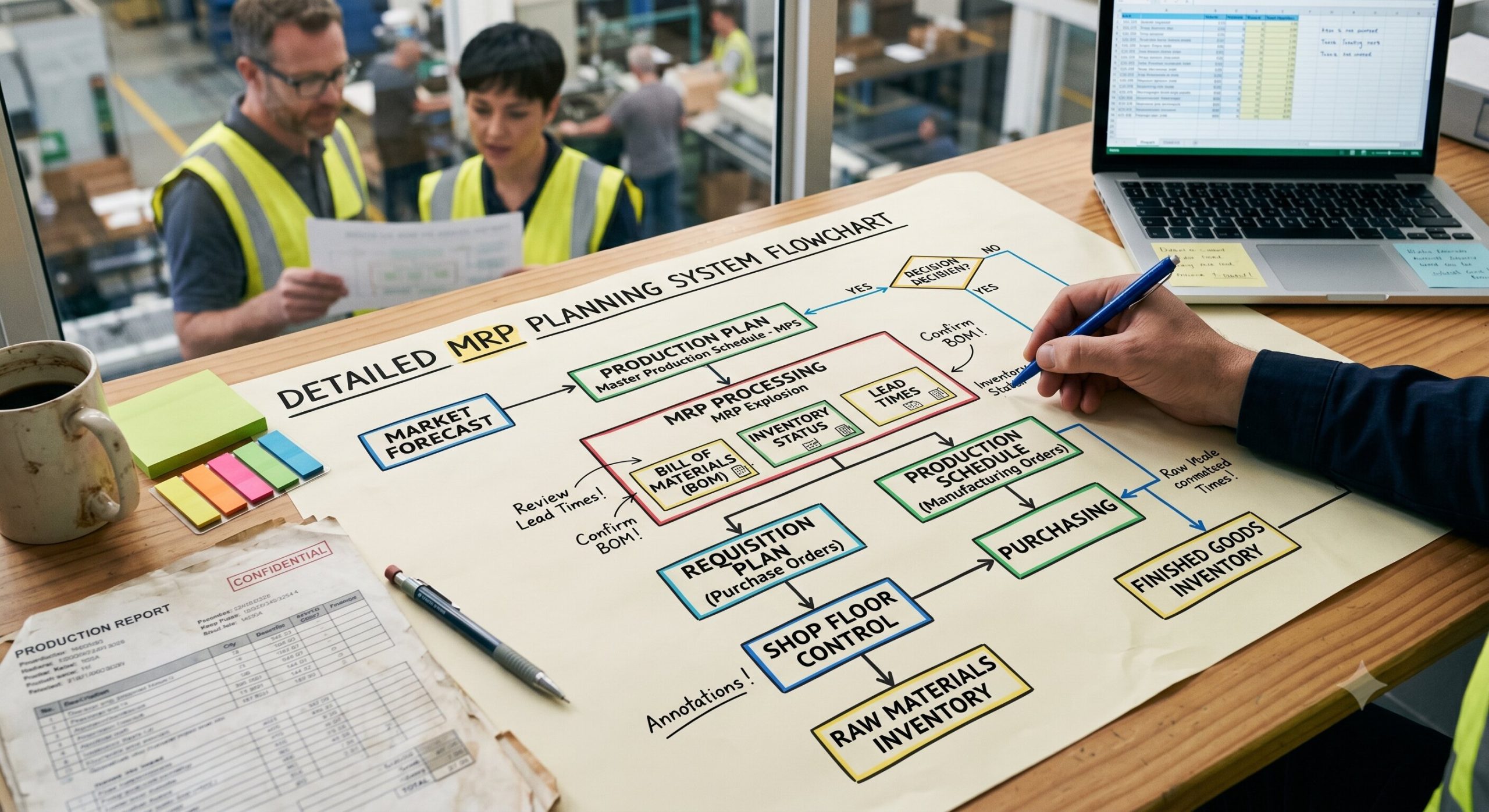
At its core, the concept of manufacturing resource planning (MRP II) evolved from earlier Material Requirements Planning (MRP I) systems. These systems were designed to answer three fundamental questions: What materials are required? How many are required? When are they needed?
The Role of an MRP Planning System
An mrp planning system functions as the brain for inventory and procurement scheduling. It relies heavily on accurate Bill of Materials (BOM), inventory data, and the master production schedule. This ensures that the right materials are available for production without tying up excess capital in inventory—a concept critical to efficient material planning.
However, as businesses scale, the line between mrp and erp often blurs. Companies looking to implement robust solutions frequently evaluate erp vs mrp functionality. A modern system erp mrp integrates financial and operational data, providing a holistic view of the enterprise.
Core Functions of MRP
- Inventory tracking and optimization.
- Detailed material planning and forecasting.
- Generating purchase orders and work orders based on lead times.
- Cost analysis associated with raw materials.
For specialized industries, variations like mrp industrial or specific modules for mrp paints ensure that even niche manufacturing processes benefit from exact material calculations.
3. The Power of Execution: Exploring the MES
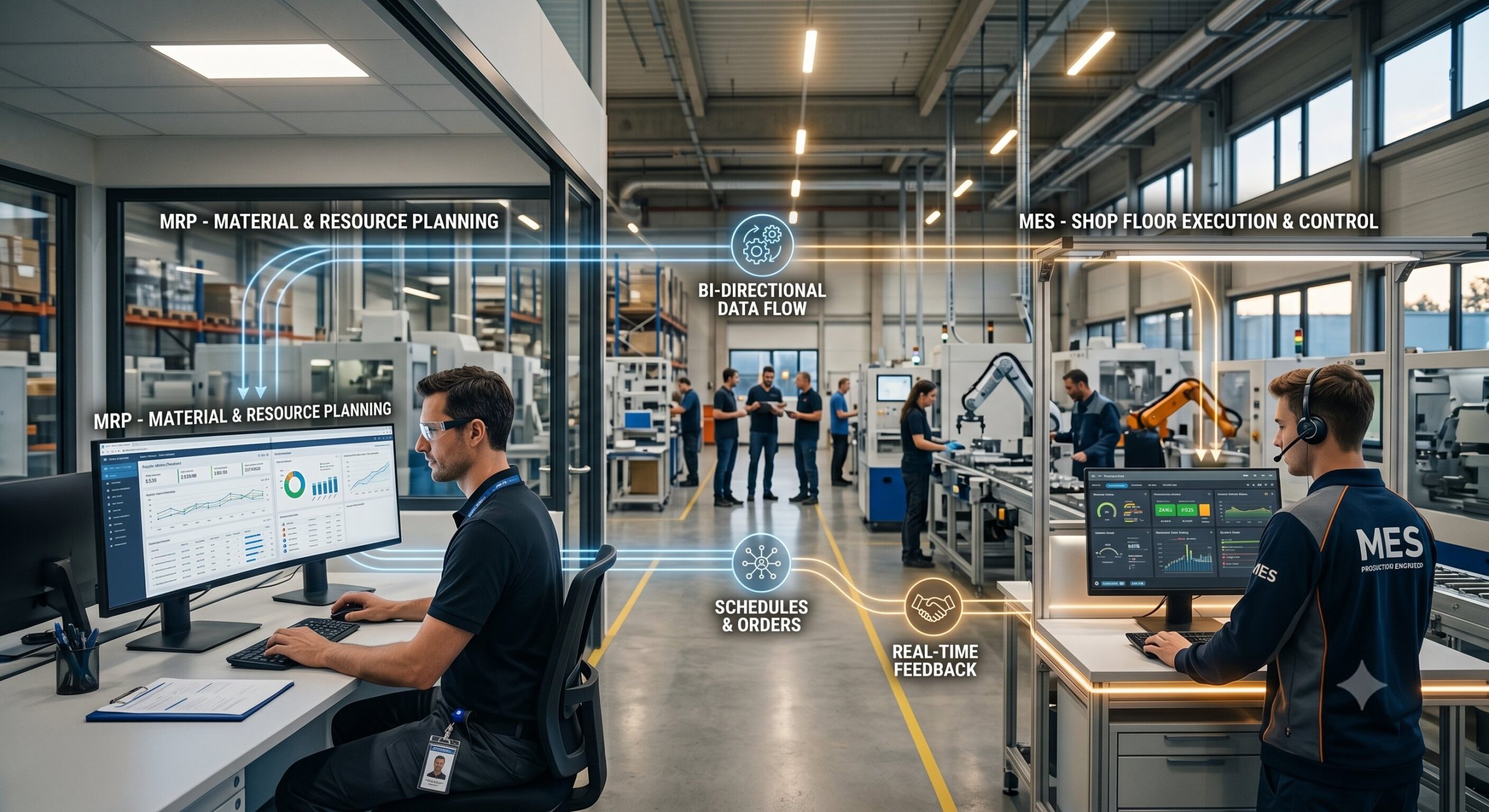
While an MRP outlines the plan, the mes manufacturing execution system is responsible for turning that plan into reality on the factory floor. It is the critical link between the business-level erp mrp systems and the automated control systems governing the machinery.
Capabilities of a Modern MES
A sophisticated mes manufacturing execution system tracks the entire production lifecycle. From raw material ingestion to finished goods output, it records exact machine run times, operator efficiency, and quality control metrics. Recently, the shift towards cloud based manufacturing execution system platforms has allowed manufacturers to achieve real-time visibility across global facilities.
Tracking mes manufacturing execution system news reveals a massive trend toward interconnectivity. Integrating a cloud-based manufacturing execution systems directly with an overarching ERP enables instantaneous feedback loops, meaning a delay on the shop floor immediately updates the mrp planning system upstream.
4. The Crucial Triangle: ERP vs MRP vs MES
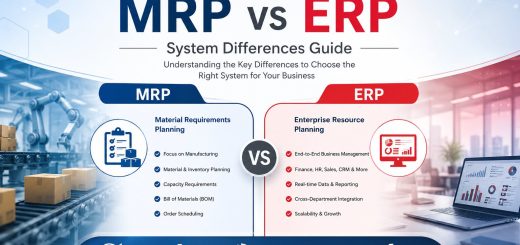
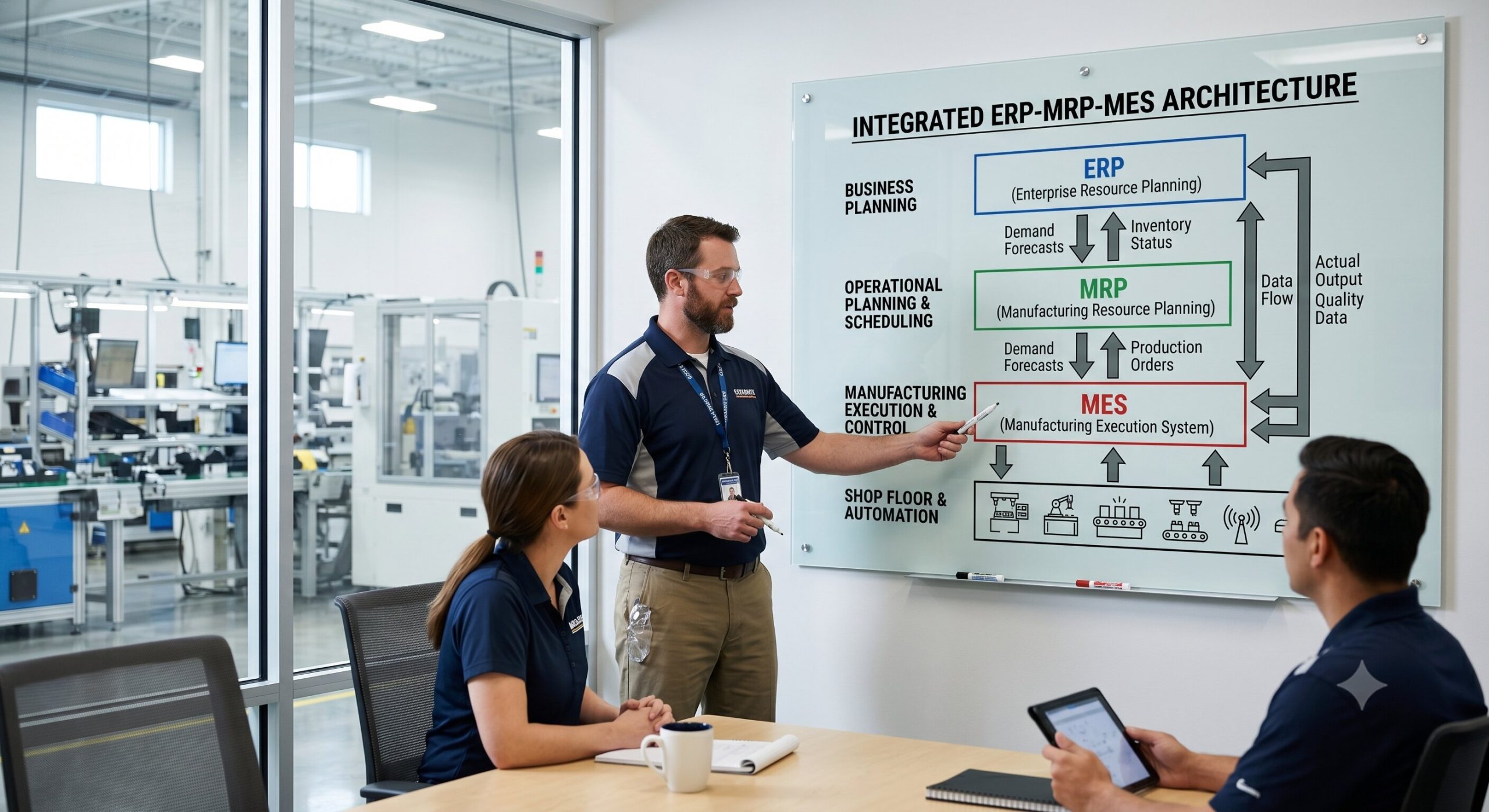
To fully grasp industrial software architecture, one must untangle the erp vs mrp vs mes puzzle. An Enterprise Resource Planning (ERP) system manages overall business operations—finance, HR, sales. An MRP manages materials and production scheduling. An MES manages the real-time execution of the shop floor.
| System Type | Primary Function | Time Horizon |
|---|---|---|
| ERP (Enterprise Resource Planning) | Business management, finance, erp and accounting software integrations. | Months to Years (Strategic) |
| MRP (Manufacturing Resource Planning) | Material planning, inventory control, and scheduling. | Days to Weeks (Tactical) |
| MES (Manufacturing Execution System) | Shop floor control, real-time tracking, quality management. | Minutes to Hours (Operational) |
It is common for organizations to seek specialized solutions, such as automotive erp software, which inherently possess deep erp mrp capabilities explicitly tailored for rigorous supply chains. Furthermore, leveraging a top-tier custom erp development company can help seamlessly fuse these systems, eliminating the traditional silos associated with older erp mrp systems.
5. Strategic Implementation: Development and Consulting
Choosing the right software stack is a massive undertaking. Organizations often rely on an experienced consultant erp to map out their specific requirements. Whether the need is for comprehensive erp software for supply chain management or a highly specific procurement erp, expert guidance mitigates risk.
Customization is often necessary. Partnering with an expert erp development company to provide targeted erp development services ensures that the nuances of your manufacturing resource planning system align perfectly with your cloud computing in erp strategy. When off-the-shelf software falls short, investing in custom erp software development bridges the critical gaps, guaranteeing that both the MRP and MES layers communicate flawlessly.
Section 6: Advanced Operational Dynamics in Production Systems
When we delve deeper into the complex mechanics of industrial environments, the conversation inevitably returns to the interplay of these foundational platforms. The true value of any software lies in its ability to translate raw data into actionable intelligence. For instance, when evaluating erp and accounting software, decision-makers must look beyond surface-level features and analyze the underlying data structures. A robust production facility relies heavily on precise timing; thus, an efficient consultant erp becomes the lifeblood of the operation, ensuring that resources are perfectly aligned with demand forecasts.
Moreover, the integration of these systems is not merely a technical exercise but a strategic imperative. As companies expand globally, the necessity for a cohesive infrastructure becomes paramount. Here, the deployment of cloud-based manufacturing execution systems provides unparalleled visibility across disparate geographical locations. This level of interconnectivity ensures that every stakeholder, from the shop floor operator to the executive suite, operates from a single source of truth. Consequently, the reliance on manufacturing resource planning is increasing, as bespoke solutions often outperform generic off-the-shelf software in highly specialized manufacturing verticals.
The role of data analytics in this context cannot be overstated. By leveraging the immense processing power of manufacturing resource planning meaning, manufacturers can run complex simulations to predict potential bottlenecks before they occur. This proactive approach is a significant departure from legacy systems, which were often purely reactive. When a facility successfully implements a comprehensive mes manufacturing execution system news, it effectively transforms its shop floor into a dynamic, responsive entity capable of adapting to real-time supply chain fluctuations.
Furthermore, the financial implications of these system integrations are profound. By seamlessly connecting operational data with financial modules—often achieved through advanced mrp industrial—organizations can maintain a tight grip on profitability. Every gram of raw material and every minute of machine uptime is accounted for, driving down waste and elevating overall margins. Ultimately, navigating this digital transformation requires a nuanced understanding of these interlocking technologies, ensuring that the chosen architecture supports long-term sustainable growth.
In many complex deployment scenarios, the sheer volume of transactional data processed hourly requires an infrastructure that guarantees near-zero latency. As production scales, the ability of the system to manage complex multi-level bill of materials dynamically is tested. It is here that the structural integrity of the chosen software platform is either proven or found wanting. Industrial leaders consistently emphasize that a failure in real-time communication between the planning layer and the execution layer can result in cascading delays, which inevitably impact customer delivery timelines and satisfaction metrics. Therefore, continuous investment in upgrading these digital pathways remains a top priority for forward-thinking manufacturing enterprises.
Additionally, human-machine interfacing has evolved drastically. Modern interfaces are designed to minimize cognitive load on operators, presenting critical data points through highly intuitive dashboards. This shift not only accelerates training times for new personnel but also significantly reduces the probability of human error during complex changeovers. As the workforce demographics shift, empowering operators with intelligent, context-aware tools is essential for maintaining high throughput and stringent quality standards.
Section 7: Advanced Operational Dynamics in Production Systems
When we delve deeper into the complex mechanics of industrial environments, the conversation inevitably returns to the interplay of these foundational platforms. The true value of any software lies in its ability to translate raw data into actionable intelligence. For instance, when evaluating cloud based manufacturing execution system, decision-makers must look beyond surface-level features and analyze the underlying data structures. A robust production facility relies heavily on precise timing; thus, an efficient custom erp software development becomes the lifeblood of the operation, ensuring that resources are perfectly aligned with demand forecasts.
Moreover, the integration of these systems is not merely a technical exercise but a strategic imperative. As companies expand globally, the necessity for a cohesive infrastructure becomes paramount. Here, the deployment of manufacturing resource planning meaning provides unparalleled visibility across disparate geographical locations. This level of interconnectivity ensures that every stakeholder, from the shop floor operator to the executive suite, operates from a single source of truth. Consequently, the reliance on erp development services is increasing, as bespoke solutions often outperform generic off-the-shelf software in highly specialized manufacturing verticals.
The role of data analytics in this context cannot be overstated. By leveraging the immense processing power of erp mrp systems, manufacturers can run complex simulations to predict potential bottlenecks before they occur. This proactive approach is a significant departure from legacy systems, which were often purely reactive. When a facility successfully implements a comprehensive manufacturing resource planning system, it effectively transforms its shop floor into a dynamic, responsive entity capable of adapting to real-time supply chain fluctuations.
Furthermore, the financial implications of these system integrations are profound. By seamlessly connecting operational data with financial modules—often achieved through advanced manufacturing resource planning—organizations can maintain a tight grip on profitability. Every gram of raw material and every minute of machine uptime is accounted for, driving down waste and elevating overall margins. Ultimately, navigating this digital transformation requires a nuanced understanding of these interlocking technologies, ensuring that the chosen architecture supports long-term sustainable growth.
In many complex deployment scenarios, the sheer volume of transactional data processed hourly requires an infrastructure that guarantees near-zero latency. As production scales, the ability of the system to manage complex multi-level bill of materials dynamically is tested. It is here that the structural integrity of the chosen software platform is either proven or found wanting. Industrial leaders consistently emphasize that a failure in real-time communication between the planning layer and the execution layer can result in cascading delays, which inevitably impact customer delivery timelines and satisfaction metrics. Therefore, continuous investment in upgrading these digital pathways remains a top priority for forward-thinking manufacturing enterprises.
Additionally, human-machine interfacing has evolved drastically. Modern interfaces are designed to minimize cognitive load on operators, presenting critical data points through highly intuitive dashboards. This shift not only accelerates training times for new personnel but also significantly reduces the probability of human error during complex changeovers. As the workforce demographics shift, empowering operators with intelligent, context-aware tools is essential for maintaining high throughput and stringent quality standards.
Section 8: Advanced Operational Dynamics in Production Systems
When we delve deeper into the complex mechanics of industrial environments, the conversation inevitably returns to the interplay of these foundational platforms. The true value of any software lies in its ability to translate raw data into actionable intelligence. For instance, when evaluating manufacturing resource planning system, decision-makers must look beyond surface-level features and analyze the underlying data structures. A robust production facility relies heavily on precise timing; thus, an efficient what is mrp in supply chain becomes the lifeblood of the operation, ensuring that resources are perfectly aligned with demand forecasts.
Moreover, the integration of these systems is not merely a technical exercise but a strategic imperative. As companies expand globally, the necessity for a cohesive infrastructure becomes paramount. Here, the deployment of difference between mrp and erp provides unparalleled visibility across disparate geographical locations. This level of interconnectivity ensures that every stakeholder, from the shop floor operator to the executive suite, operates from a single source of truth. Consequently, the reliance on cloud based manufacturing execution system is increasing, as bespoke solutions often outperform generic off-the-shelf software in highly specialized manufacturing verticals.
The role of data analytics in this context cannot be overstated. By leveraging the immense processing power of erp mrp, manufacturers can run complex simulations to predict potential bottlenecks before they occur. This proactive approach is a significant departure from legacy systems, which were often purely reactive. When a facility successfully implements a comprehensive erp vs mrp, it effectively transforms its shop floor into a dynamic, responsive entity capable of adapting to real-time supply chain fluctuations.
Furthermore, the financial implications of these system integrations are profound. By seamlessly connecting operational data with financial modules—often achieved through advanced cloud computing in erp—organizations can maintain a tight grip on profitability. Every gram of raw material and every minute of machine uptime is accounted for, driving down waste and elevating overall margins. Ultimately, navigating this digital transformation requires a nuanced understanding of these interlocking technologies, ensuring that the chosen architecture supports long-term sustainable growth.
In many complex deployment scenarios, the sheer volume of transactional data processed hourly requires an infrastructure that guarantees near-zero latency. As production scales, the ability of the system to manage complex multi-level bill of materials dynamically is tested. It is here that the structural integrity of the chosen software platform is either proven or found wanting. Industrial leaders consistently emphasize that a failure in real-time communication between the planning layer and the execution layer can result in cascading delays, which inevitably impact customer delivery timelines and satisfaction metrics. Therefore, continuous investment in upgrading these digital pathways remains a top priority for forward-thinking manufacturing enterprises.
Additionally, human-machine interfacing has evolved drastically. Modern interfaces are designed to minimize cognitive load on operators, presenting critical data points through highly intuitive dashboards. This shift not only accelerates training times for new personnel but also significantly reduces the probability of human error during complex changeovers. As the workforce demographics shift, empowering operators with intelligent, context-aware tools is essential for maintaining high throughput and stringent quality standards.
Section 9: Advanced Operational Dynamics in Production Systems
When we delve deeper into the complex mechanics of industrial environments, the conversation inevitably returns to the interplay of these foundational platforms. The true value of any software lies in its ability to translate raw data into actionable intelligence. For instance, when evaluating cloud-based manufacturing execution systems, decision-makers must look beyond surface-level features and analyze the underlying data structures. A robust production facility relies heavily on precise timing; thus, an efficient system erp mrp becomes the lifeblood of the operation, ensuring that resources are perfectly aligned with demand forecasts.
Moreover, the integration of these systems is not merely a technical exercise but a strategic imperative. As companies expand globally, the necessity for a cohesive infrastructure becomes paramount. Here, the deployment of manufacturing resource planning provides unparalleled visibility across disparate geographical locations. This level of interconnectivity ensures that every stakeholder, from the shop floor operator to the executive suite, operates from a single source of truth. Consequently, the reliance on erp vs mrp is increasing, as bespoke solutions often outperform generic off-the-shelf software in highly specialized manufacturing verticals.
The role of data analytics in this context cannot be overstated. By leveraging the immense processing power of mes manufacturing execution system, manufacturers can run complex simulations to predict potential bottlenecks before they occur. This proactive approach is a significant departure from legacy systems, which were often purely reactive. When a facility successfully implements a comprehensive what is mrp in supply chain, it effectively transforms its shop floor into a dynamic, responsive entity capable of adapting to real-time supply chain fluctuations.
Furthermore, the financial implications of these system integrations are profound. By seamlessly connecting operational data with financial modules—often achieved through advanced mrp paints—organizations can maintain a tight grip on profitability. Every gram of raw material and every minute of machine uptime is accounted for, driving down waste and elevating overall margins. Ultimately, navigating this digital transformation requires a nuanced understanding of these interlocking technologies, ensuring that the chosen architecture supports long-term sustainable growth.
In many complex deployment scenarios, the sheer volume of transactional data processed hourly requires an infrastructure that guarantees near-zero latency. As production scales, the ability of the system to manage complex multi-level bill of materials dynamically is tested. It is here that the structural integrity of the chosen software platform is either proven or found wanting. Industrial leaders consistently emphasize that a failure in real-time communication between the planning layer and the execution layer can result in cascading delays, which inevitably impact customer delivery timelines and satisfaction metrics. Therefore, continuous investment in upgrading these digital pathways remains a top priority for forward-thinking manufacturing enterprises.
Additionally, human-machine interfacing has evolved drastically. Modern interfaces are designed to minimize cognitive load on operators, presenting critical data points through highly intuitive dashboards. This shift not only accelerates training times for new personnel but also significantly reduces the probability of human error during complex changeovers. As the workforce demographics shift, empowering operators with intelligent, context-aware tools is essential for maintaining high throughput and stringent quality standards.
Section 10: Advanced Operational Dynamics in Production Systems
When we delve deeper into the complex mechanics of industrial environments, the conversation inevitably returns to the interplay of these foundational platforms. The true value of any software lies in its ability to translate raw data into actionable intelligence. For instance, when evaluating manufacturing resource planning, decision-makers must look beyond surface-level features and analyze the underlying data structures. A robust production facility relies heavily on precise timing; thus, an efficient cloud based manufacturing execution system becomes the lifeblood of the operation, ensuring that resources are perfectly aligned with demand forecasts.
Moreover, the integration of these systems is not merely a technical exercise but a strategic imperative. As companies expand globally, the necessity for a cohesive infrastructure becomes paramount. Here, the deployment of consultant erp provides unparalleled visibility across disparate geographical locations. This level of interconnectivity ensures that every stakeholder, from the shop floor operator to the executive suite, operates from a single source of truth. Consequently, the reliance on custom erp development company is increasing, as bespoke solutions often outperform generic off-the-shelf software in highly specialized manufacturing verticals.
The role of data analytics in this context cannot be overstated. By leveraging the immense processing power of mrp paints, manufacturers can run complex simulations to predict potential bottlenecks before they occur. This proactive approach is a significant departure from legacy systems, which were often purely reactive. When a facility successfully implements a comprehensive cloud-based manufacturing execution systems, it effectively transforms its shop floor into a dynamic, responsive entity capable of adapting to real-time supply chain fluctuations.
Furthermore, the financial implications of these system integrations are profound. By seamlessly connecting operational data with financial modules—often achieved through advanced what is mrp in supply chain—organizations can maintain a tight grip on profitability. Every gram of raw material and every minute of machine uptime is accounted for, driving down waste and elevating overall margins. Ultimately, navigating this digital transformation requires a nuanced understanding of these interlocking technologies, ensuring that the chosen architecture supports long-term sustainable growth.
In many complex deployment scenarios, the sheer volume of transactional data processed hourly requires an infrastructure that guarantees near-zero latency. As production scales, the ability of the system to manage complex multi-level bill of materials dynamically is tested. It is here that the structural integrity of the chosen software platform is either proven or found wanting. Industrial leaders consistently emphasize that a failure in real-time communication between the planning layer and the execution layer can result in cascading delays, which inevitably impact customer delivery timelines and satisfaction metrics. Therefore, continuous investment in upgrading these digital pathways remains a top priority for forward-thinking manufacturing enterprises.
Additionally, human-machine interfacing has evolved drastically. Modern interfaces are designed to minimize cognitive load on operators, presenting critical data points through highly intuitive dashboards. This shift not only accelerates training times for new personnel but also significantly reduces the probability of human error during complex changeovers. As the workforce demographics shift, empowering operators with intelligent, context-aware tools is essential for maintaining high throughput and stringent quality standards.
Section 11: Advanced Operational Dynamics in Production Systems
When we delve deeper into the complex mechanics of industrial environments, the conversation inevitably returns to the interplay of these foundational platforms. The true value of any software lies in its ability to translate raw data into actionable intelligence. For instance, when evaluating erp development company, decision-makers must look beyond surface-level features and analyze the underlying data structures. A robust production facility relies heavily on precise timing; thus, an efficient automotive erp software becomes the lifeblood of the operation, ensuring that resources are perfectly aligned with demand forecasts.
Moreover, the integration of these systems is not merely a technical exercise but a strategic imperative. As companies expand globally, the necessity for a cohesive infrastructure becomes paramount. Here, the deployment of manufacturing resource planning provides unparalleled visibility across disparate geographical locations. This level of interconnectivity ensures that every stakeholder, from the shop floor operator to the executive suite, operates from a single source of truth. Consequently, the reliance on mrp industrial is increasing, as bespoke solutions often outperform generic off-the-shelf software in highly specialized manufacturing verticals.
The role of data analytics in this context cannot be overstated. By leveraging the immense processing power of what is mrp in supply chain, manufacturers can run complex simulations to predict potential bottlenecks before they occur. This proactive approach is a significant departure from legacy systems, which were often purely reactive. When a facility successfully implements a comprehensive mrp and erp, it effectively transforms its shop floor into a dynamic, responsive entity capable of adapting to real-time supply chain fluctuations.
Furthermore, the financial implications of these system integrations are profound. By seamlessly connecting operational data with financial modules—often achieved through advanced erp software for supply chain management—organizations can maintain a tight grip on profitability. Every gram of raw material and every minute of machine uptime is accounted for, driving down waste and elevating overall margins. Ultimately, navigating this digital transformation requires a nuanced understanding of these interlocking technologies, ensuring that the chosen architecture supports long-term sustainable growth.
In many complex deployment scenarios, the sheer volume of transactional data processed hourly requires an infrastructure that guarantees near-zero latency. As production scales, the ability of the system to manage complex multi-level bill of materials dynamically is tested. It is here that the structural integrity of the chosen software platform is either proven or found wanting. Industrial leaders consistently emphasize that a failure in real-time communication between the planning layer and the execution layer can result in cascading delays, which inevitably impact customer delivery timelines and satisfaction metrics. Therefore, continuous investment in upgrading these digital pathways remains a top priority for forward-thinking manufacturing enterprises.
Additionally, human-machine interfacing has evolved drastically. Modern interfaces are designed to minimize cognitive load on operators, presenting critical data points through highly intuitive dashboards. This shift not only accelerates training times for new personnel but also significantly reduces the probability of human error during complex changeovers. As the workforce demographics shift, empowering operators with intelligent, context-aware tools is essential for maintaining high throughput and stringent quality standards.
Section 12: Advanced Operational Dynamics in Production Systems
When we delve deeper into the complex mechanics of industrial environments, the conversation inevitably returns to the interplay of these foundational platforms. The true value of any software lies in its ability to translate raw data into actionable intelligence. For instance, when evaluating consultant erp, decision-makers must look beyond surface-level features and analyze the underlying data structures. A robust production facility relies heavily on precise timing; thus, an efficient mrp industrial becomes the lifeblood of the operation, ensuring that resources are perfectly aligned with demand forecasts.
Moreover, the integration of these systems is not merely a technical exercise but a strategic imperative. As companies expand globally, the necessity for a cohesive infrastructure becomes paramount. Here, the deployment of erp vs mrp provides unparalleled visibility across disparate geographical locations. This level of interconnectivity ensures that every stakeholder, from the shop floor operator to the executive suite, operates from a single source of truth. Consequently, the reliance on mes manufacturing execution system news is increasing, as bespoke solutions often outperform generic off-the-shelf software in highly specialized manufacturing verticals.
The role of data analytics in this context cannot be overstated. By leveraging the immense processing power of mrp paints, manufacturers can run complex simulations to predict potential bottlenecks before they occur. This proactive approach is a significant departure from legacy systems, which were often purely reactive. When a facility successfully implements a comprehensive erp vs mrp vs mes, it effectively transforms its shop floor into a dynamic, responsive entity capable of adapting to real-time supply chain fluctuations.
Furthermore, the financial implications of these system integrations are profound. By seamlessly connecting operational data with financial modules—often achieved through advanced cloud based manufacturing execution system—organizations can maintain a tight grip on profitability. Every gram of raw material and every minute of machine uptime is accounted for, driving down waste and elevating overall margins. Ultimately, navigating this digital transformation requires a nuanced understanding of these interlocking technologies, ensuring that the chosen architecture supports long-term sustainable growth.
In many complex deployment scenarios, the sheer volume of transactional data processed hourly requires an infrastructure that guarantees near-zero latency. As production scales, the ability of the system to manage complex multi-level bill of materials dynamically is tested. It is here that the structural integrity of the chosen software platform is either proven or found wanting. Industrial leaders consistently emphasize that a failure in real-time communication between the planning layer and the execution layer can result in cascading delays, which inevitably impact customer delivery timelines and satisfaction metrics. Therefore, continuous investment in upgrading these digital pathways remains a top priority for forward-thinking manufacturing enterprises.
Additionally, human-machine interfacing has evolved drastically. Modern interfaces are designed to minimize cognitive load on operators, presenting critical data points through highly intuitive dashboards. This shift not only accelerates training times for new personnel but also significantly reduces the probability of human error during complex changeovers. As the workforce demographics shift, empowering operators with intelligent, context-aware tools is essential for maintaining high throughput and stringent quality standards.
Section 13: Advanced Operational Dynamics in Production Systems
When we delve deeper into the complex mechanics of industrial environments, the conversation inevitably returns to the interplay of these foundational platforms. The true value of any software lies in its ability to translate raw data into actionable intelligence. For instance, when evaluating erp development services, decision-makers must look beyond surface-level features and analyze the underlying data structures. A robust production facility relies heavily on precise timing; thus, an efficient mrp and erp becomes the lifeblood of the operation, ensuring that resources are perfectly aligned with demand forecasts.
Moreover, the integration of these systems is not merely a technical exercise but a strategic imperative. As companies expand globally, the necessity for a cohesive infrastructure becomes paramount. Here, the deployment of erp mrp provides unparalleled visibility across disparate geographical locations. This level of interconnectivity ensures that every stakeholder, from the shop floor operator to the executive suite, operates from a single source of truth. Consequently, the reliance on cloud based manufacturing execution system is increasing, as bespoke solutions often outperform generic off-the-shelf software in highly specialized manufacturing verticals.
The role of data analytics in this context cannot be overstated. By leveraging the immense processing power of what is mrp in supply chain, manufacturers can run complex simulations to predict potential bottlenecks before they occur. This proactive approach is a significant departure from legacy systems, which were often purely reactive. When a facility successfully implements a comprehensive mrp planning system, it effectively transforms its shop floor into a dynamic, responsive entity capable of adapting to real-time supply chain fluctuations.
Furthermore, the financial implications of these system integrations are profound. By seamlessly connecting operational data with financial modules—often achieved through advanced cloud-based manufacturing execution systems—organizations can maintain a tight grip on profitability. Every gram of raw material and every minute of machine uptime is accounted for, driving down waste and elevating overall margins. Ultimately, navigating this digital transformation requires a nuanced understanding of these interlocking technologies, ensuring that the chosen architecture supports long-term sustainable growth.
In many complex deployment scenarios, the sheer volume of transactional data processed hourly requires an infrastructure that guarantees near-zero latency. As production scales, the ability of the system to manage complex multi-level bill of materials dynamically is tested. It is here that the structural integrity of the chosen software platform is either proven or found wanting. Industrial leaders consistently emphasize that a failure in real-time communication between the planning layer and the execution layer can result in cascading delays, which inevitably impact customer delivery timelines and satisfaction metrics. Therefore, continuous investment in upgrading these digital pathways remains a top priority for forward-thinking manufacturing enterprises.
Additionally, human-machine interfacing has evolved drastically. Modern interfaces are designed to minimize cognitive load on operators, presenting critical data points through highly intuitive dashboards. This shift not only accelerates training times for new personnel but also significantly reduces the probability of human error during complex changeovers. As the workforce demographics shift, empowering operators with intelligent, context-aware tools is essential for maintaining high throughput and stringent quality standards.
Section 14: Advanced Operational Dynamics in Production Systems
When we delve deeper into the complex mechanics of industrial environments, the conversation inevitably returns to the interplay of these foundational platforms. The true value of any software lies in its ability to translate raw data into actionable intelligence. For instance, when evaluating erp development services, decision-makers must look beyond surface-level features and analyze the underlying data structures. A robust production facility relies heavily on precise timing; thus, an efficient manufacturing resource planning becomes the lifeblood of the operation, ensuring that resources are perfectly aligned with demand forecasts.
Moreover, the integration of these systems is not merely a technical exercise but a strategic imperative. As companies expand globally, the necessity for a cohesive infrastructure becomes paramount. Here, the deployment of mrp and erp provides unparalleled visibility across disparate geographical locations. This level of interconnectivity ensures that every stakeholder, from the shop floor operator to the executive suite, operates from a single source of truth. Consequently, the reliance on manufacturing resource planning system is increasing, as bespoke solutions often outperform generic off-the-shelf software in highly specialized manufacturing verticals.
The role of data analytics in this context cannot be overstated. By leveraging the immense processing power of procurement erp, manufacturers can run complex simulations to predict potential bottlenecks before they occur. This proactive approach is a significant departure from legacy systems, which were often purely reactive. When a facility successfully implements a comprehensive mes manufacturing execution system, it effectively transforms its shop floor into a dynamic, responsive entity capable of adapting to real-time supply chain fluctuations.
Furthermore, the financial implications of these system integrations are profound. By seamlessly connecting operational data with financial modules—often achieved through advanced mes manufacturing execution system news—organizations can maintain a tight grip on profitability. Every gram of raw material and every minute of machine uptime is accounted for, driving down waste and elevating overall margins. Ultimately, navigating this digital transformation requires a nuanced understanding of these interlocking technologies, ensuring that the chosen architecture supports long-term sustainable growth.
In many complex deployment scenarios, the sheer volume of transactional data processed hourly requires an infrastructure that guarantees near-zero latency. As production scales, the ability of the system to manage complex multi-level bill of materials dynamically is tested. It is here that the structural integrity of the chosen software platform is either proven or found wanting. Industrial leaders consistently emphasize that a failure in real-time communication between the planning layer and the execution layer can result in cascading delays, which inevitably impact customer delivery timelines and satisfaction metrics. Therefore, continuous investment in upgrading these digital pathways remains a top priority for forward-thinking manufacturing enterprises.
Additionally, human-machine interfacing has evolved drastically. Modern interfaces are designed to minimize cognitive load on operators, presenting critical data points through highly intuitive dashboards. This shift not only accelerates training times for new personnel but also significantly reduces the probability of human error during complex changeovers. As the workforce demographics shift, empowering operators with intelligent, context-aware tools is essential for maintaining high throughput and stringent quality standards.
Section 15: Advanced Operational Dynamics in Production Systems
When we delve deeper into the complex mechanics of industrial environments, the conversation inevitably returns to the interplay of these foundational platforms. The true value of any software lies in its ability to translate raw data into actionable intelligence. For instance, when evaluating erp vs mrp vs mes, decision-makers must look beyond surface-level features and analyze the underlying data structures. A robust production facility relies heavily on precise timing; thus, an efficient erp and accounting software becomes the lifeblood of the operation, ensuring that resources are perfectly aligned with demand forecasts.
Moreover, the integration of these systems is not merely a technical exercise but a strategic imperative. As companies expand globally, the necessity for a cohesive infrastructure becomes paramount. Here, the deployment of automotive erp software provides unparalleled visibility across disparate geographical locations. This level of interconnectivity ensures that every stakeholder, from the shop floor operator to the executive suite, operates from a single source of truth. Consequently, the reliance on erp mrp is increasing, as bespoke solutions often outperform generic off-the-shelf software in highly specialized manufacturing verticals.
The role of data analytics in this context cannot be overstated. By leveraging the immense processing power of manufacturing resource planning system, manufacturers can run complex simulations to predict potential bottlenecks before they occur. This proactive approach is a significant departure from legacy systems, which were often purely reactive. When a facility successfully implements a comprehensive cloud-based manufacturing execution systems, it effectively transforms its shop floor into a dynamic, responsive entity capable of adapting to real-time supply chain fluctuations.
Furthermore, the financial implications of these system integrations are profound. By seamlessly connecting operational data with financial modules—often achieved through advanced cloud computing in erp—organizations can maintain a tight grip on profitability. Every gram of raw material and every minute of machine uptime is accounted for, driving down waste and elevating overall margins. Ultimately, navigating this digital transformation requires a nuanced understanding of these interlocking technologies, ensuring that the chosen architecture supports long-term sustainable growth.
In many complex deployment scenarios, the sheer volume of transactional data processed hourly requires an infrastructure that guarantees near-zero latency. As production scales, the ability of the system to manage complex multi-level bill of materials dynamically is tested. It is here that the structural integrity of the chosen software platform is either proven or found wanting. Industrial leaders consistently emphasize that a failure in real-time communication between the planning layer and the execution layer can result in cascading delays, which inevitably impact customer delivery timelines and satisfaction metrics. Therefore, continuous investment in upgrading these digital pathways remains a top priority for forward-thinking manufacturing enterprises.
Additionally, human-machine interfacing has evolved drastically. Modern interfaces are designed to minimize cognitive load on operators, presenting critical data points through highly intuitive dashboards. This shift not only accelerates training times for new personnel but also significantly reduces the probability of human error during complex changeovers. As the workforce demographics shift, empowering operators with intelligent, context-aware tools is essential for maintaining high throughput and stringent quality standards.
Section 16: Advanced Operational Dynamics in Production Systems
When we delve deeper into the complex mechanics of industrial environments, the conversation inevitably returns to the interplay of these foundational platforms. The true value of any software lies in its ability to translate raw data into actionable intelligence. For instance, when evaluating erp software for supply chain management, decision-makers must look beyond surface-level features and analyze the underlying data structures. A robust production facility relies heavily on precise timing; thus, an efficient what is mrp in supply chain becomes the lifeblood of the operation, ensuring that resources are perfectly aligned with demand forecasts.
Moreover, the integration of these systems is not merely a technical exercise but a strategic imperative. As companies expand globally, the necessity for a cohesive infrastructure becomes paramount. Here, the deployment of erp development company provides unparalleled visibility across disparate geographical locations. This level of interconnectivity ensures that every stakeholder, from the shop floor operator to the executive suite, operates from a single source of truth. Consequently, the reliance on erp vs mrp is increasing, as bespoke solutions often outperform generic off-the-shelf software in highly specialized manufacturing verticals.
The role of data analytics in this context cannot be overstated. By leveraging the immense processing power of custom erp software development, manufacturers can run complex simulations to predict potential bottlenecks before they occur. This proactive approach is a significant departure from legacy systems, which were often purely reactive. When a facility successfully implements a comprehensive cloud computing in erp, it effectively transforms its shop floor into a dynamic, responsive entity capable of adapting to real-time supply chain fluctuations.
Furthermore, the financial implications of these system integrations are profound. By seamlessly connecting operational data with financial modules—often achieved through advanced cloud based manufacturing execution system—organizations can maintain a tight grip on profitability. Every gram of raw material and every minute of machine uptime is accounted for, driving down waste and elevating overall margins. Ultimately, navigating this digital transformation requires a nuanced understanding of these interlocking technologies, ensuring that the chosen architecture supports long-term sustainable growth.
In many complex deployment scenarios, the sheer volume of transactional data processed hourly requires an infrastructure that guarantees near-zero latency. As production scales, the ability of the system to manage complex multi-level bill of materials dynamically is tested. It is here that the structural integrity of the chosen software platform is either proven or found wanting. Industrial leaders consistently emphasize that a failure in real-time communication between the planning layer and the execution layer can result in cascading delays, which inevitably impact customer delivery timelines and satisfaction metrics. Therefore, continuous investment in upgrading these digital pathways remains a top priority for forward-thinking manufacturing enterprises.
Additionally, human-machine interfacing has evolved drastically. Modern interfaces are designed to minimize cognitive load on operators, presenting critical data points through highly intuitive dashboards. This shift not only accelerates training times for new personnel but also significantly reduces the probability of human error during complex changeovers. As the workforce demographics shift, empowering operators with intelligent, context-aware tools is essential for maintaining high throughput and stringent quality standards.
Section 17: Advanced Operational Dynamics in Production Systems
When we delve deeper into the complex mechanics of industrial environments, the conversation inevitably returns to the interplay of these foundational platforms. The true value of any software lies in its ability to translate raw data into actionable intelligence. For instance, when evaluating erp mrp systems, decision-makers must look beyond surface-level features and analyze the underlying data structures. A robust production facility relies heavily on precise timing; thus, an efficient mes manufacturing execution system becomes the lifeblood of the operation, ensuring that resources are perfectly aligned with demand forecasts.
Moreover, the integration of these systems is not merely a technical exercise but a strategic imperative. As companies expand globally, the necessity for a cohesive infrastructure becomes paramount. Here, the deployment of what is mrp in supply chain provides unparalleled visibility across disparate geographical locations. This level of interconnectivity ensures that every stakeholder, from the shop floor operator to the executive suite, operates from a single source of truth. Consequently, the reliance on mrp industrial is increasing, as bespoke solutions often outperform generic off-the-shelf software in highly specialized manufacturing verticals.
The role of data analytics in this context cannot be overstated. By leveraging the immense processing power of mrp paints, manufacturers can run complex simulations to predict potential bottlenecks before they occur. This proactive approach is a significant departure from legacy systems, which were often purely reactive. When a facility successfully implements a comprehensive cloud-based manufacturing execution systems, it effectively transforms its shop floor into a dynamic, responsive entity capable of adapting to real-time supply chain fluctuations.
Furthermore, the financial implications of these system integrations are profound. By seamlessly connecting operational data with financial modules—often achieved through advanced system erp mrp—organizations can maintain a tight grip on profitability. Every gram of raw material and every minute of machine uptime is accounted for, driving down waste and elevating overall margins. Ultimately, navigating this digital transformation requires a nuanced understanding of these interlocking technologies, ensuring that the chosen architecture supports long-term sustainable growth.
In many complex deployment scenarios, the sheer volume of transactional data processed hourly requires an infrastructure that guarantees near-zero latency. As production scales, the ability of the system to manage complex multi-level bill of materials dynamically is tested. It is here that the structural integrity of the chosen software platform is either proven or found wanting. Industrial leaders consistently emphasize that a failure in real-time communication between the planning layer and the execution layer can result in cascading delays, which inevitably impact customer delivery timelines and satisfaction metrics. Therefore, continuous investment in upgrading these digital pathways remains a top priority for forward-thinking manufacturing enterprises.
Additionally, human-machine interfacing has evolved drastically. Modern interfaces are designed to minimize cognitive load on operators, presenting critical data points through highly intuitive dashboards. This shift not only accelerates training times for new personnel but also significantly reduces the probability of human error during complex changeovers. As the workforce demographics shift, empowering operators with intelligent, context-aware tools is essential for maintaining high throughput and stringent quality standards.
Section 18: Advanced Operational Dynamics in Production Systems
When we delve deeper into the complex mechanics of industrial environments, the conversation inevitably returns to the interplay of these foundational platforms. The true value of any software lies in its ability to translate raw data into actionable intelligence. For instance, when evaluating system erp mrp, decision-makers must look beyond surface-level features and analyze the underlying data structures. A robust production facility relies heavily on precise timing; thus, an efficient erp mrp becomes the lifeblood of the operation, ensuring that resources are perfectly aligned with demand forecasts.
Moreover, the integration of these systems is not merely a technical exercise but a strategic imperative. As companies expand globally, the necessity for a cohesive infrastructure becomes paramount. Here, the deployment of custom erp development company provides unparalleled visibility across disparate geographical locations. This level of interconnectivity ensures that every stakeholder, from the shop floor operator to the executive suite, operates from a single source of truth. Consequently, the reliance on mrp paints is increasing, as bespoke solutions often outperform generic off-the-shelf software in highly specialized manufacturing verticals.
The role of data analytics in this context cannot be overstated. By leveraging the immense processing power of mrp planning system, manufacturers can run complex simulations to predict potential bottlenecks before they occur. This proactive approach is a significant departure from legacy systems, which were often purely reactive. When a facility successfully implements a comprehensive erp software for supply chain management, it effectively transforms its shop floor into a dynamic, responsive entity capable of adapting to real-time supply chain fluctuations.
Furthermore, the financial implications of these system integrations are profound. By seamlessly connecting operational data with financial modules—often achieved through advanced manufacturing resource planning meaning—organizations can maintain a tight grip on profitability. Every gram of raw material and every minute of machine uptime is accounted for, driving down waste and elevating overall margins. Ultimately, navigating this digital transformation requires a nuanced understanding of these interlocking technologies, ensuring that the chosen architecture supports long-term sustainable growth.
In many complex deployment scenarios, the sheer volume of transactional data processed hourly requires an infrastructure that guarantees near-zero latency. As production scales, the ability of the system to manage complex multi-level bill of materials dynamically is tested. It is here that the structural integrity of the chosen software platform is either proven or found wanting. Industrial leaders consistently emphasize that a failure in real-time communication between the planning layer and the execution layer can result in cascading delays, which inevitably impact customer delivery timelines and satisfaction metrics. Therefore, continuous investment in upgrading these digital pathways remains a top priority for forward-thinking manufacturing enterprises.
Additionally, human-machine interfacing has evolved drastically. Modern interfaces are designed to minimize cognitive load on operators, presenting critical data points through highly intuitive dashboards. This shift not only accelerates training times for new personnel but also significantly reduces the probability of human error during complex changeovers. As the workforce demographics shift, empowering operators with intelligent, context-aware tools is essential for maintaining high throughput and stringent quality standards.
Section 19: Advanced Operational Dynamics in Production Systems
When we delve deeper into the complex mechanics of industrial environments, the conversation inevitably returns to the interplay of these foundational platforms. The true value of any software lies in its ability to translate raw data into actionable intelligence. For instance, when evaluating cloud computing in erp, decision-makers must look beyond surface-level features and analyze the underlying data structures. A robust production facility relies heavily on precise timing; thus, an efficient erp development company becomes the lifeblood of the operation, ensuring that resources are perfectly aligned with demand forecasts.
Moreover, the integration of these systems is not merely a technical exercise but a strategic imperative. As companies expand globally, the necessity for a cohesive infrastructure becomes paramount. Here, the deployment of custom erp software development provides unparalleled visibility across disparate geographical locations. This level of interconnectivity ensures that every stakeholder, from the shop floor operator to the executive suite, operates from a single source of truth. Consequently, the reliance on erp mrp systems is increasing, as bespoke solutions often outperform generic off-the-shelf software in highly specialized manufacturing verticals.
The role of data analytics in this context cannot be overstated. By leveraging the immense processing power of erp and accounting software, manufacturers can run complex simulations to predict potential bottlenecks before they occur. This proactive approach is a significant departure from legacy systems, which were often purely reactive. When a facility successfully implements a comprehensive mrp planning system, it effectively transforms its shop floor into a dynamic, responsive entity capable of adapting to real-time supply chain fluctuations.
Furthermore, the financial implications of these system integrations are profound. By seamlessly connecting operational data with financial modules—often achieved through advanced mrp industrial—organizations can maintain a tight grip on profitability. Every gram of raw material and every minute of machine uptime is accounted for, driving down waste and elevating overall margins. Ultimately, navigating this digital transformation requires a nuanced understanding of these interlocking technologies, ensuring that the chosen architecture supports long-term sustainable growth.
In many complex deployment scenarios, the sheer volume of transactional data processed hourly requires an infrastructure that guarantees near-zero latency. As production scales, the ability of the system to manage complex multi-level bill of materials dynamically is tested. It is here that the structural integrity of the chosen software platform is either proven or found wanting. Industrial leaders consistently emphasize that a failure in real-time communication between the planning layer and the execution layer can result in cascading delays, which inevitably impact customer delivery timelines and satisfaction metrics. Therefore, continuous investment in upgrading these digital pathways remains a top priority for forward-thinking manufacturing enterprises.
Additionally, human-machine interfacing has evolved drastically. Modern interfaces are designed to minimize cognitive load on operators, presenting critical data points through highly intuitive dashboards. This shift not only accelerates training times for new personnel but also significantly reduces the probability of human error during complex changeovers. As the workforce demographics shift, empowering operators with intelligent, context-aware tools is essential for maintaining high throughput and stringent quality standards.
Section 20: Advanced Operational Dynamics in Production Systems
When we delve deeper into the complex mechanics of industrial environments, the conversation inevitably returns to the interplay of these foundational platforms. The true value of any software lies in its ability to translate raw data into actionable intelligence. For instance, when evaluating erp and accounting software, decision-makers must look beyond surface-level features and analyze the underlying data structures. A robust production facility relies heavily on precise timing; thus, an efficient difference between mrp and erp becomes the lifeblood of the operation, ensuring that resources are perfectly aligned with demand forecasts.
Moreover, the integration of these systems is not merely a technical exercise but a strategic imperative. As companies expand globally, the necessity for a cohesive infrastructure becomes paramount. Here, the deployment of mrp and erp provides unparalleled visibility across disparate geographical locations. This level of interconnectivity ensures that every stakeholder, from the shop floor operator to the executive suite, operates from a single source of truth. Consequently, the reliance on cloud-based manufacturing execution systems is increasing, as bespoke solutions often outperform generic off-the-shelf software in highly specialized manufacturing verticals.
The role of data analytics in this context cannot be overstated. By leveraging the immense processing power of mrp industrial, manufacturers can run complex simulations to predict potential bottlenecks before they occur. This proactive approach is a significant departure from legacy systems, which were often purely reactive. When a facility successfully implements a comprehensive erp mrp, it effectively transforms its shop floor into a dynamic, responsive entity capable of adapting to real-time supply chain fluctuations.
Furthermore, the financial implications of these system integrations are profound. By seamlessly connecting operational data with financial modules—often achieved through advanced consultant erp—organizations can maintain a tight grip on profitability. Every gram of raw material and every minute of machine uptime is accounted for, driving down waste and elevating overall margins. Ultimately, navigating this digital transformation requires a nuanced understanding of these interlocking technologies, ensuring that the chosen architecture supports long-term sustainable growth.
In many complex deployment scenarios, the sheer volume of transactional data processed hourly requires an infrastructure that guarantees near-zero latency. As production scales, the ability of the system to manage complex multi-level bill of materials dynamically is tested. It is here that the structural integrity of the chosen software platform is either proven or found wanting. Industrial leaders consistently emphasize that a failure in real-time communication between the planning layer and the execution layer can result in cascading delays, which inevitably impact customer delivery timelines and satisfaction metrics. Therefore, continuous investment in upgrading these digital pathways remains a top priority for forward-thinking manufacturing enterprises.
Additionally, human-machine interfacing has evolved drastically. Modern interfaces are designed to minimize cognitive load on operators, presenting critical data points through highly intuitive dashboards. This shift not only accelerates training times for new personnel but also significantly reduces the probability of human error during complex changeovers. As the workforce demographics shift, empowering operators with intelligent, context-aware tools is essential for maintaining high throughput and stringent quality standards.
Section 21: Advanced Operational Dynamics in Production Systems
When we delve deeper into the complex mechanics of industrial environments, the conversation inevitably returns to the interplay of these foundational platforms. The true value of any software lies in its ability to translate raw data into actionable intelligence. For instance, when evaluating erp mrp, decision-makers must look beyond surface-level features and analyze the underlying data structures. A robust production facility relies heavily on precise timing; thus, an efficient erp software for supply chain management becomes the lifeblood of the operation, ensuring that resources are perfectly aligned with demand forecasts.
Moreover, the integration of these systems is not merely a technical exercise but a strategic imperative. As companies expand globally, the necessity for a cohesive infrastructure becomes paramount. Here, the deployment of custom erp development company provides unparalleled visibility across disparate geographical locations. This level of interconnectivity ensures that every stakeholder, from the shop floor operator to the executive suite, operates from a single source of truth. Consequently, the reliance on difference between mrp and erp is increasing, as bespoke solutions often outperform generic off-the-shelf software in highly specialized manufacturing verticals.
The role of data analytics in this context cannot be overstated. By leveraging the immense processing power of mrp paints, manufacturers can run complex simulations to predict potential bottlenecks before they occur. This proactive approach is a significant departure from legacy systems, which were often purely reactive. When a facility successfully implements a comprehensive what is mrp in supply chain, it effectively transforms its shop floor into a dynamic, responsive entity capable of adapting to real-time supply chain fluctuations.
Furthermore, the financial implications of these system integrations are profound. By seamlessly connecting operational data with financial modules—often achieved through advanced cloud computing in erp—organizations can maintain a tight grip on profitability. Every gram of raw material and every minute of machine uptime is accounted for, driving down waste and elevating overall margins. Ultimately, navigating this digital transformation requires a nuanced understanding of these interlocking technologies, ensuring that the chosen architecture supports long-term sustainable growth.
In many complex deployment scenarios, the sheer volume of transactional data processed hourly requires an infrastructure that guarantees near-zero latency. As production scales, the ability of the system to manage complex multi-level bill of materials dynamically is tested. It is here that the structural integrity of the chosen software platform is either proven or found wanting. Industrial leaders consistently emphasize that a failure in real-time communication between the planning layer and the execution layer can result in cascading delays, which inevitably impact customer delivery timelines and satisfaction metrics. Therefore, continuous investment in upgrading these digital pathways remains a top priority for forward-thinking manufacturing enterprises.
Additionally, human-machine interfacing has evolved drastically. Modern interfaces are designed to minimize cognitive load on operators, presenting critical data points through highly intuitive dashboards. This shift not only accelerates training times for new personnel but also significantly reduces the probability of human error during complex changeovers. As the workforce demographics shift, empowering operators with intelligent, context-aware tools is essential for maintaining high throughput and stringent quality standards.
Section 22: Advanced Operational Dynamics in Production Systems
When we delve deeper into the complex mechanics of industrial environments, the conversation inevitably returns to the interplay of these foundational platforms. The true value of any software lies in its ability to translate raw data into actionable intelligence. For instance, when evaluating mrp industrial, decision-makers must look beyond surface-level features and analyze the underlying data structures. A robust production facility relies heavily on precise timing; thus, an efficient erp development company becomes the lifeblood of the operation, ensuring that resources are perfectly aligned with demand forecasts.
Moreover, the integration of these systems is not merely a technical exercise but a strategic imperative. As companies expand globally, the necessity for a cohesive infrastructure becomes paramount. Here, the deployment of custom erp software development provides unparalleled visibility across disparate geographical locations. This level of interconnectivity ensures that every stakeholder, from the shop floor operator to the executive suite, operates from a single source of truth. Consequently, the reliance on cloud based manufacturing execution system is increasing, as bespoke solutions often outperform generic off-the-shelf software in highly specialized manufacturing verticals.
The role of data analytics in this context cannot be overstated. By leveraging the immense processing power of erp mrp, manufacturers can run complex simulations to predict potential bottlenecks before they occur. This proactive approach is a significant departure from legacy systems, which were often purely reactive. When a facility successfully implements a comprehensive mes manufacturing execution system, it effectively transforms its shop floor into a dynamic, responsive entity capable of adapting to real-time supply chain fluctuations.
Furthermore, the financial implications of these system integrations are profound. By seamlessly connecting operational data with financial modules—often achieved through advanced mes manufacturing execution system news—organizations can maintain a tight grip on profitability. Every gram of raw material and every minute of machine uptime is accounted for, driving down waste and elevating overall margins. Ultimately, navigating this digital transformation requires a nuanced understanding of these interlocking technologies, ensuring that the chosen architecture supports long-term sustainable growth.
In many complex deployment scenarios, the sheer volume of transactional data processed hourly requires an infrastructure that guarantees near-zero latency. As production scales, the ability of the system to manage complex multi-level bill of materials dynamically is tested. It is here that the structural integrity of the chosen software platform is either proven or found wanting. Industrial leaders consistently emphasize that a failure in real-time communication between the planning layer and the execution layer can result in cascading delays, which inevitably impact customer delivery timelines and satisfaction metrics. Therefore, continuous investment in upgrading these digital pathways remains a top priority for forward-thinking manufacturing enterprises.
Additionally, human-machine interfacing has evolved drastically. Modern interfaces are designed to minimize cognitive load on operators, presenting critical data points through highly intuitive dashboards. This shift not only accelerates training times for new personnel but also significantly reduces the probability of human error during complex changeovers. As the workforce demographics shift, empowering operators with intelligent, context-aware tools is essential for maintaining high throughput and stringent quality standards.
Section 23: Advanced Operational Dynamics in Production Systems
When we delve deeper into the complex mechanics of industrial environments, the conversation inevitably returns to the interplay of these foundational platforms. The true value of any software lies in its ability to translate raw data into actionable intelligence. For instance, when evaluating manufacturing resource planning, decision-makers must look beyond surface-level features and analyze the underlying data structures. A robust production facility relies heavily on precise timing; thus, an efficient cloud based manufacturing execution system becomes the lifeblood of the operation, ensuring that resources are perfectly aligned with demand forecasts.
Moreover, the integration of these systems is not merely a technical exercise but a strategic imperative. As companies expand globally, the necessity for a cohesive infrastructure becomes paramount. Here, the deployment of procurement erp provides unparalleled visibility across disparate geographical locations. This level of interconnectivity ensures that every stakeholder, from the shop floor operator to the executive suite, operates from a single source of truth. Consequently, the reliance on custom erp development company is increasing, as bespoke solutions often outperform generic off-the-shelf software in highly specialized manufacturing verticals.
The role of data analytics in this context cannot be overstated. By leveraging the immense processing power of erp and accounting software, manufacturers can run complex simulations to predict potential bottlenecks before they occur. This proactive approach is a significant departure from legacy systems, which were often purely reactive. When a facility successfully implements a comprehensive custom erp software development, it effectively transforms its shop floor into a dynamic, responsive entity capable of adapting to real-time supply chain fluctuations.
Furthermore, the financial implications of these system integrations are profound. By seamlessly connecting operational data with financial modules—often achieved through advanced erp development services—organizations can maintain a tight grip on profitability. Every gram of raw material and every minute of machine uptime is accounted for, driving down waste and elevating overall margins. Ultimately, navigating this digital transformation requires a nuanced understanding of these interlocking technologies, ensuring that the chosen architecture supports long-term sustainable growth.
In many complex deployment scenarios, the sheer volume of transactional data processed hourly requires an infrastructure that guarantees near-zero latency. As production scales, the ability of the system to manage complex multi-level bill of materials dynamically is tested. It is here that the structural integrity of the chosen software platform is either proven or found wanting. Industrial leaders consistently emphasize that a failure in real-time communication between the planning layer and the execution layer can result in cascading delays, which inevitably impact customer delivery timelines and satisfaction metrics. Therefore, continuous investment in upgrading these digital pathways remains a top priority for forward-thinking manufacturing enterprises.
Additionally, human-machine interfacing has evolved drastically. Modern interfaces are designed to minimize cognitive load on operators, presenting critical data points through highly intuitive dashboards. This shift not only accelerates training times for new personnel but also significantly reduces the probability of human error during complex changeovers. As the workforce demographics shift, empowering operators with intelligent, context-aware tools is essential for maintaining high throughput and stringent quality standards.
Section 24: Advanced Operational Dynamics in Production Systems
When we delve deeper into the complex mechanics of industrial environments, the conversation inevitably returns to the interplay of these foundational platforms. The true value of any software lies in its ability to translate raw data into actionable intelligence. For instance, when evaluating manufacturing resource planning system, decision-makers must look beyond surface-level features and analyze the underlying data structures. A robust production facility relies heavily on precise timing; thus, an efficient erp development company becomes the lifeblood of the operation, ensuring that resources are perfectly aligned with demand forecasts.
Moreover, the integration of these systems is not merely a technical exercise but a strategic imperative. As companies expand globally, the necessity for a cohesive infrastructure becomes paramount. Here, the deployment of mrp industrial provides unparalleled visibility across disparate geographical locations. This level of interconnectivity ensures that every stakeholder, from the shop floor operator to the executive suite, operates from a single source of truth. Consequently, the reliance on automotive erp software is increasing, as bespoke solutions often outperform generic off-the-shelf software in highly specialized manufacturing verticals.
The role of data analytics in this context cannot be overstated. By leveraging the immense processing power of system erp mrp, manufacturers can run complex simulations to predict potential bottlenecks before they occur. This proactive approach is a significant departure from legacy systems, which were often purely reactive. When a facility successfully implements a comprehensive mrp and erp, it effectively transforms its shop floor into a dynamic, responsive entity capable of adapting to real-time supply chain fluctuations.
Furthermore, the financial implications of these system integrations are profound. By seamlessly connecting operational data with financial modules—often achieved through advanced erp software for supply chain management—organizations can maintain a tight grip on profitability. Every gram of raw material and every minute of machine uptime is accounted for, driving down waste and elevating overall margins. Ultimately, navigating this digital transformation requires a nuanced understanding of these interlocking technologies, ensuring that the chosen architecture supports long-term sustainable growth.
In many complex deployment scenarios, the sheer volume of transactional data processed hourly requires an infrastructure that guarantees near-zero latency. As production scales, the ability of the system to manage complex multi-level bill of materials dynamically is tested. It is here that the structural integrity of the chosen software platform is either proven or found wanting. Industrial leaders consistently emphasize that a failure in real-time communication between the planning layer and the execution layer can result in cascading delays, which inevitably impact customer delivery timelines and satisfaction metrics. Therefore, continuous investment in upgrading these digital pathways remains a top priority for forward-thinking manufacturing enterprises.
Additionally, human-machine interfacing has evolved drastically. Modern interfaces are designed to minimize cognitive load on operators, presenting critical data points through highly intuitive dashboards. This shift not only accelerates training times for new personnel but also significantly reduces the probability of human error during complex changeovers. As the workforce demographics shift, empowering operators with intelligent, context-aware tools is essential for maintaining high throughput and stringent quality standards.
Section 25: Advanced Operational Dynamics in Production Systems
When we delve deeper into the complex mechanics of industrial environments, the conversation inevitably returns to the interplay of these foundational platforms. The true value of any software lies in its ability to translate raw data into actionable intelligence. For instance, when evaluating erp development services, decision-makers must look beyond surface-level features and analyze the underlying data structures. A robust production facility relies heavily on precise timing; thus, an efficient erp mrp becomes the lifeblood of the operation, ensuring that resources are perfectly aligned with demand forecasts.
Moreover, the integration of these systems is not merely a technical exercise but a strategic imperative. As companies expand globally, the necessity for a cohesive infrastructure becomes paramount. Here, the deployment of manufacturing resource planning provides unparalleled visibility across disparate geographical locations. This level of interconnectivity ensures that every stakeholder, from the shop floor operator to the executive suite, operates from a single source of truth. Consequently, the reliance on mrp and erp is increasing, as bespoke solutions often outperform generic off-the-shelf software in highly specialized manufacturing verticals.
The role of data analytics in this context cannot be overstated. By leveraging the immense processing power of material planning, manufacturers can run complex simulations to predict potential bottlenecks before they occur. This proactive approach is a significant departure from legacy systems, which were often purely reactive. When a facility successfully implements a comprehensive cloud based manufacturing execution system, it effectively transforms its shop floor into a dynamic, responsive entity capable of adapting to real-time supply chain fluctuations.
Furthermore, the financial implications of these system integrations are profound. By seamlessly connecting operational data with financial modules—often achieved through advanced erp development company—organizations can maintain a tight grip on profitability. Every gram of raw material and every minute of machine uptime is accounted for, driving down waste and elevating overall margins. Ultimately, navigating this digital transformation requires a nuanced understanding of these interlocking technologies, ensuring that the chosen architecture supports long-term sustainable growth.
In many complex deployment scenarios, the sheer volume of transactional data processed hourly requires an infrastructure that guarantees near-zero latency. As production scales, the ability of the system to manage complex multi-level bill of materials dynamically is tested. It is here that the structural integrity of the chosen software platform is either proven or found wanting. Industrial leaders consistently emphasize that a failure in real-time communication between the planning layer and the execution layer can result in cascading delays, which inevitably impact customer delivery timelines and satisfaction metrics. Therefore, continuous investment in upgrading these digital pathways remains a top priority for forward-thinking manufacturing enterprises.
Additionally, human-machine interfacing has evolved drastically. Modern interfaces are designed to minimize cognitive load on operators, presenting critical data points through highly intuitive dashboards. This shift not only accelerates training times for new personnel but also significantly reduces the probability of human error during complex changeovers. As the workforce demographics shift, empowering operators with intelligent, context-aware tools is essential for maintaining high throughput and stringent quality standards.
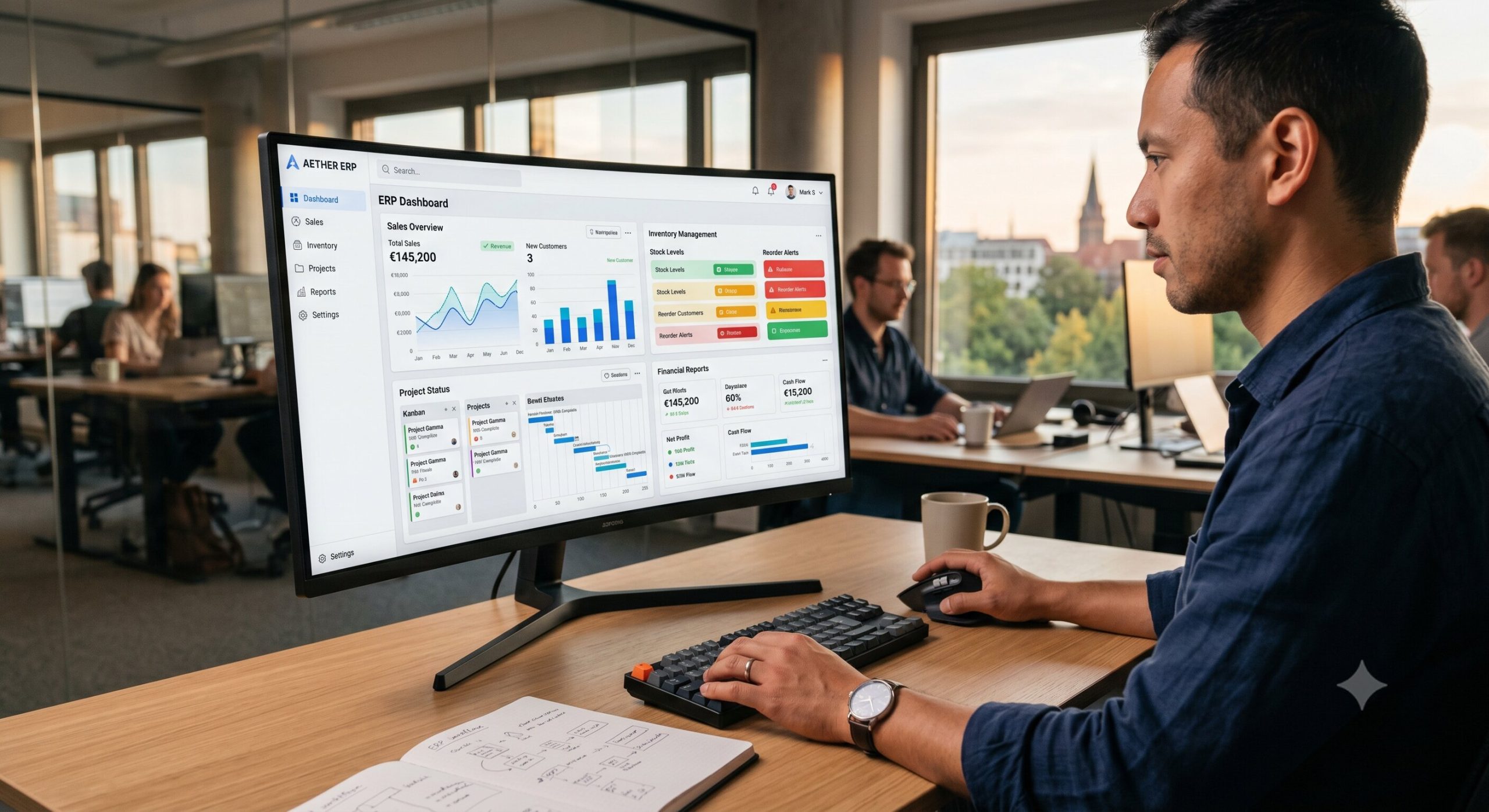
Conclusion: Mastering the MRP and MES Ecosystem
In conclusion, the journey to optimize manufacturing processes is a continuous cycle of planning and execution. While the question of erp vs mrp vs mes might seem complex, the answer lies in understanding their distinct yet complementary roles. A powerful mrp planning system sets the stage, ensuring material planning is flawless. The mes manufacturing execution system acts upon this stage, orchestrating the physical creation of value. By aligning with a specialized erp development company and utilizing expert consultant erp services, organizations can leverage cloud computing in erp to build a resilient, future-proof industrial powerhouse.
Frequently Asked Questions (FAQ)
- Q: What is the main difference between mrp and erp?
A: An mrp planning system focuses exclusively on manufacturing processes and material management, whereas an ERP handles the entire business operation, including HR, finance, and CRM. - Q: Why is a cloud based manufacturing execution system important?
A: A cloud based manufacturing execution system provides real-time data access across multiple facilities, enabling better remote management and faster decision-making compared to on-premise solutions. - Q: Can custom erp software development help integrate my MRP and MES?
A: Yes, a custom erp development company can build specialized APIs and middleware to ensure seamless, real-time data flow between your system erp mrp and your MES, eliminating data silos.