
What Risks Are Posed by IoT Devices & How ERP Systems Solve Them
TL;DR – Key Takeaways for Busy Executives
In the high-stakes landscape of Industry 4.0, enterprises are rapidly deploying IoT and IIoT technologies to drive industrial automation. While this integration of PLC machines, SCADA systems, sensors, and motors leads to a significant increase production, it also introduces catastrophic security risks. The physical hardware—often featuring Siemens components—is now a target for cyberattacks that can desynchronize production or destroy machinery. The only holistic solution is the deployment of a robust Manufacturing ERP Software. By utilizing custom erp solutions, organizations can achieve 100% interfacing synchronization, secure connectivity between 2 devices, and end-to-end process automation, effectively turning security vulnerabilities into a manufacturing enhancement opportunity.
1. Introduction: The Brave New World of Connected Hardware
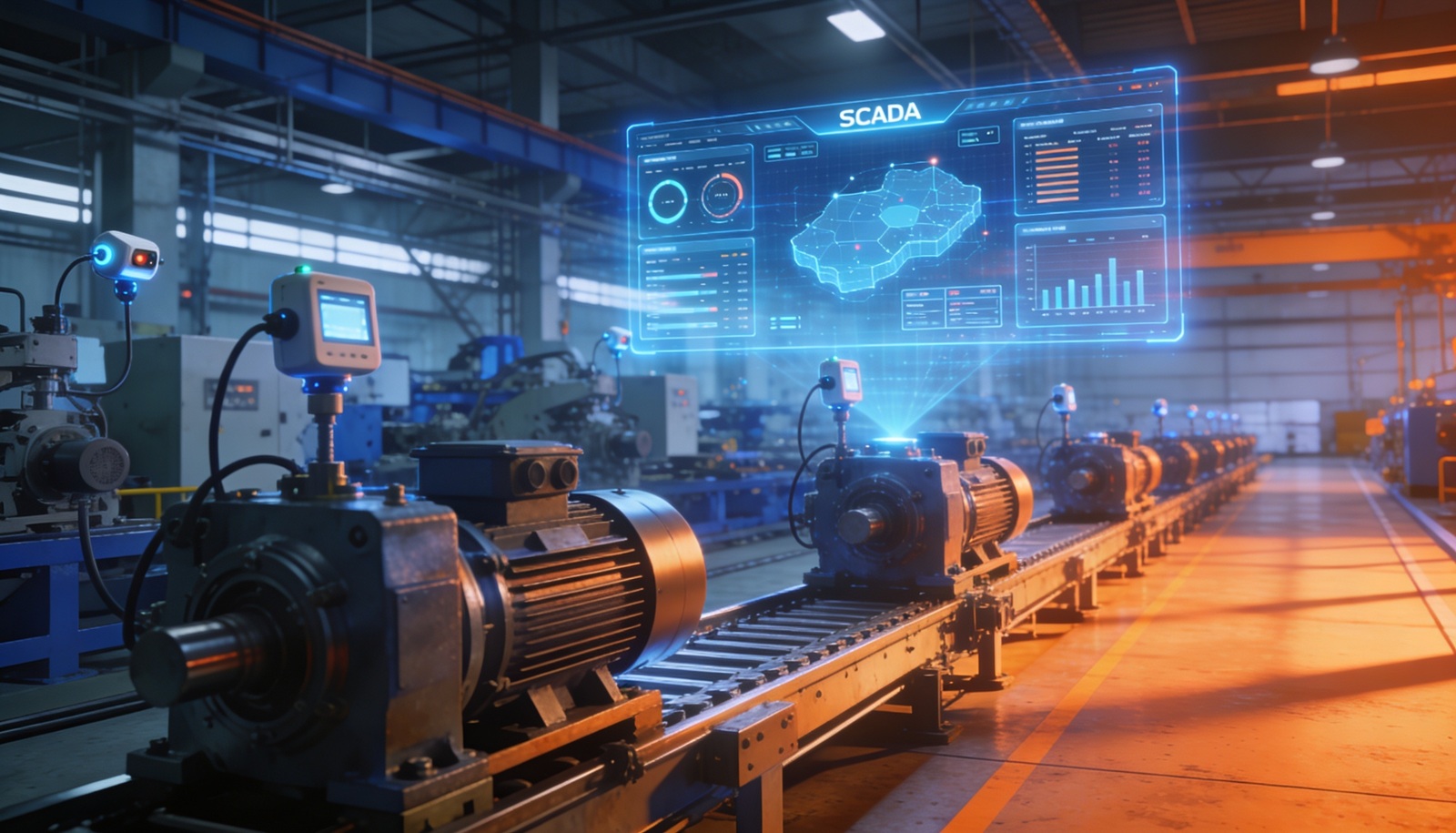
The dawn of Industry 4.0 has brought with it a paradigm shift that is as exciting as it is terrifying. We are no longer living in an era where the factory floor is an island. Today, the hardware of industrial automation is alive, connected, and constantly communicating. Siemens PLCs, high-torque motors, and precision sensors are now part of a global web of iot devices that drive modern enterprises.
This “Smart Factory” model relies on the connectivity between 2 devices—and ultimately, thousands of devices—to achieve a level of interfacing synchronization that was previously impossible. This synchronization is what allows for process automation that can increase production and enhance manufacturing output to meet the demands of a globalized economy. However, as we bridge the gap between the physical and digital worlds, we open a Pandora’s box of risks. The risks posed by IoT devices are no longer just academic; they are a clear and present danger to the survival of the 21st-century enterprise.
But there is a light at the end of the tunnel. The same connectivity that creates risk also creates the solution. By integrating iot and iiot data into a centralized erp system, enterprises can gain the visibility, control, and security needed to thrive. This article is a 5,000-word deep-dive into the technical, operational, and strategic realities of industrial automation and the role of serp software and custom erp solutions in securing our industrial future.
2. The Exhaustive Risk Analysis: Why Your IoT Hardware is a Liability
To understand why an erp system is necessary, we must first perform a brutal assessment of the risks posed by IoT devices. In an industrial automation environment, these risks are physical, digital, and financial.
2.1. The Vulnerability of PLC Machines and Siemens Controllers
PLC machines are the “brains” of the machine level. In a Siemens-heavy environment, these controllers manage everything from conveyor speed to chemical flow. However, many of these devices were designed for speed and reliability, not security. They often use legacy protocols like Modbus or Profinet that lack encryption. A hacker who gains access to the network can “Force” a PLC machine to ignore safety signals from sensors, leading to catastrophic hardware failure.
2.2. SCADA Hijacking and Interfacing Synchronization Failures
The SCADA (Supervisory Control and Data Acquisition) system is the human interface to the factory floor. It is the cockpit from which operators monitor motors and sensors. The risk here is “Desynchronization.” If an attacker intercepts the connectivity between 2 devices and injects a delay or false data, the interfacing synchronization of the entire plant collapses. Imagine a robotic arm moving before the sensor tells it the part is in place; the result is a massive mechanical collision and a total stop in production.
2.3. The “Silent Failure” of Industrial Sensors
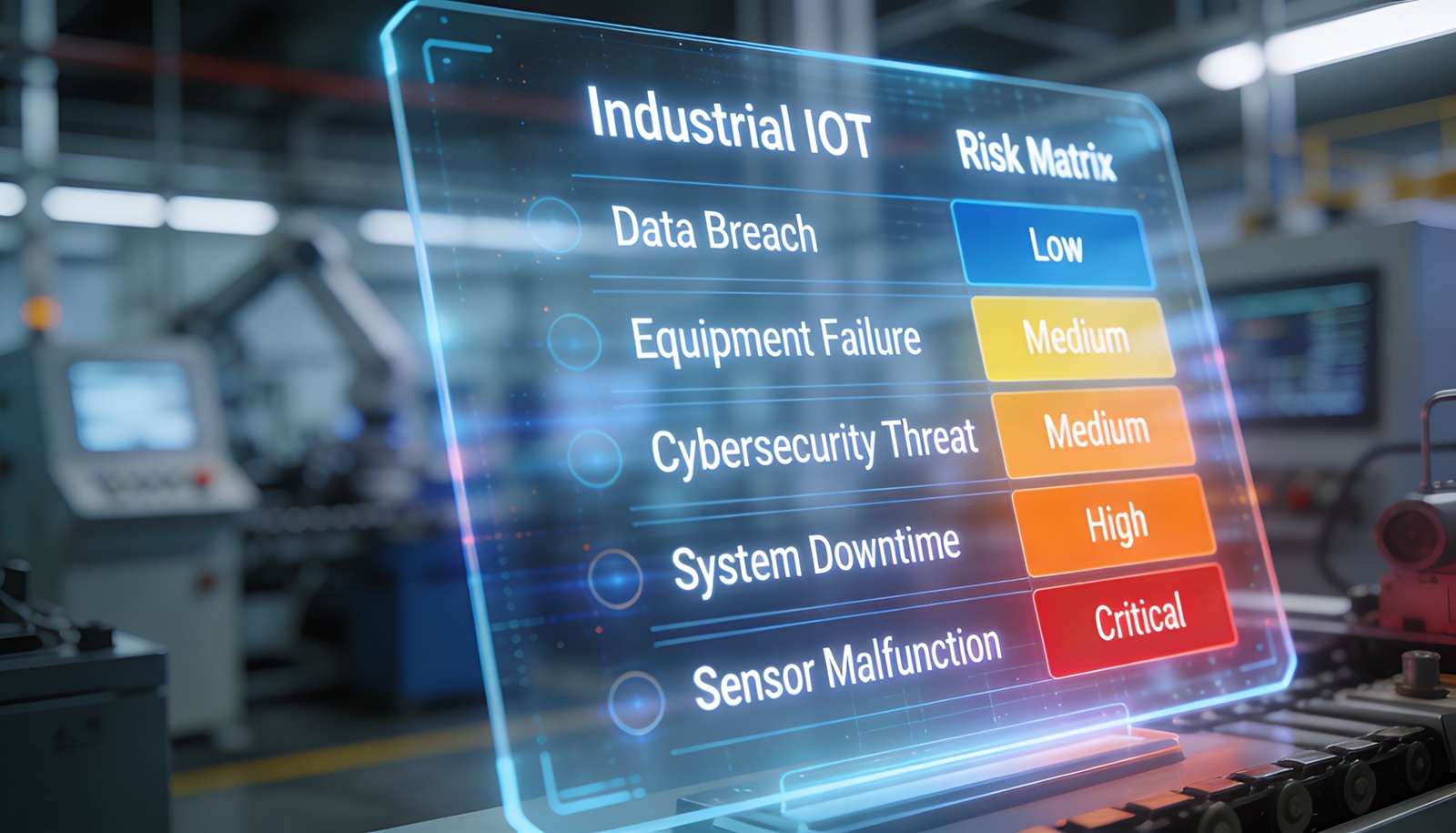
Perhaps the most insidious risk is the manipulation of sensors. A smart sensor might report that a cooling fan motor is running at 100% when it is actually failing. This “Silent Failure” prevents the erp system from triggering maintenance alerts, leading to a surprise shutdown that can cost an enterprise millions in lost industrial automation time.
3. How ERP Systems Solve the IoT Security Puzzle
A modern erp system is far more than just a place to track invoices. In the era of Industry 4.0, serp software (Smart ERP) acts as the “Digital Immune System” of the company. Here is how custom erp solutions solve the risks posed by IoT devices.
3.1. Centralized Data Validation and “Sanity Checks”
When iot data flows directly into an erp system, the software can perform real-time “Sanity Checks.” For example, if the SCADA system reports that the production line is moving at 100 units per hour, but the sensors on the motors show an energy draw consistent with 50 units per hour, the serp software can immediately flag a potential hack or hardware failure. This level of interfacing synchronization is only possible when the ERP is the master of all data.
3.2. Secure Connectivity and Gateway Management
A custom erp solution can act as a secure gateway for all connectivity between 2 devices. Instead of having thousands of iot devices exposed to the internet, they all connect to a local “Edge” server managed by the erp system. This server encrypts the data and ensures that only authorized PLC machines and SCADA terminals can communicate with the plant hardware.
3.3. Automated Process Automation for Security Response
One of the most powerful features of modern industrial automation is the ability of the erp system to execute process automation in response to a threat. If a cyberattack is detected, the Production Planning Software can automatically switch critical Siemens controllers to a “Safe State,” saving the hardware from destruction while the IT team investigates.
4. The Technical Handbook: Integrating Siemens, SCADA, and PLCs with ERP
To truly increase production and enhance manufacturing, you must understand the technical layers of integration. Below is a breakdown of the Industry 4.0 technology stack for a secure enterprise.
| Layer | Technology | Role in Security & Efficiency |
|---|---|---|
| Edge Layer | Sensors, Motors, Siemens PLCs | Direct control of hardware and data collection. |
| Control Layer | SCADA, HMI | Supervisory control and interfacing synchronization. |
| Integration Layer | OPC UA, MQTT, Custom Gateways | Securing the connectivity between 2 devices. |
| Enterprise Layer | ERP System, SERP Software | Centralized process automation and business logic. |
In this stack, Siemens hardware (like the SIMATIC S7 series) provides the necessary “hooks” for custom erp solutions to monitor the health of motors and sensors. By using standardized protocols like OPC UA, enterprises can ensure that their industrial automation data is not just fast, but also secure and actionable within the erp system.
5. Industry Deep-Dives: Real-World Applications of IoT-ERP Synergy
The risks posed by IoT devices are not the same for every company. Let’s look at how custom erp solutions solve industry-specific challenges.
5.1. The Automotive Sector: Managing Massive Motor Fleets
In an automotive assembly plant, thousands of robotic motors must work with sub-millimeter precision. A custom erp solution manages the interfacing synchronization across multiple production lines, ensuring that a hack on a single PLC machine doesn’t cascade into a plant-wide disaster. This allows the enterprise to increase production without sacrificing safety.
5.2. Pharmaceutical Manufacturing: Guaranteeing Data Integrity
In Pharma, “Data is the Product.” If sensors are compromised, entire batches of medicine must be destroyed. The erp system provides an immutable log of all iot data, cross-referencing it with SCADA reports to ensure 100% compliance and manufacturing enhancement.
5.3. Food & Beverage: Optimizing Sensors for Freshness
In the F&B industry, iot sensors monitor temperature and humidity. A failure here leads to spoilage. Custom erp solutions use process automation to automatically adjust cooling systems if a sensor detects a deviation, ensuring that industrial automation keeps the product safe and the increase production goals on track.
6. Manufacturing Enhance: The Strategic Value of IoT-ERP Integration
The final goal of solving iot risks is to increase production industrial automation efficiency. When your hardware, PLC machines, and SCADA systems are all synchronized via a serp software platform, you unlock massive ROI.
- Predictive Maintenance: By analyzing the vibration data of motors, the erp system can predict a failure before it happens, reducing downtime by up to 50%.
- Energy Optimization: Custom erp solutions can schedule high-energy process automation tasks during low-cost hours, enhancing manufacturing profitability.
- Real-time OEE Tracking: With 100% interfacing synchronization, the enterprise can see the exact efficiency of every machine, allowing for instant adjustments that increase production.
7. Conclusion: Building a Resilient Industrial Future
In conclusion, the risks posed by IoT devices in the era of Industry 4.0 are a formidable challenge for any enterprise. However, they are not insurmountable. By leveraging ERP Consulting Services and placing a robust erp system at the heart of your industrial automation strategy, you can turn these risks into your greatest strengths. From the Siemens PLCs on the floor to the serp software in the cloud, every piece of hardware must be part of a secure, synchronized, and automated ecosystem. The path to increased production and manufacturing enhancement is paved with data, and with the right ERP, that path is secure.
Frequently Asked Questions (FAQ)
- Q: Can a standard ERP handle IoT data?
A: No. You need serp software or a custom erp solution designed specifically for IIoT and industrial automation. - Q: What is the biggest risk to SCADA?
A: Desynchronization. A hack that breaks the interfacing synchronization between PLC machines can physically destroy machinery. - Q: How does ERP increase production?
A: Through predictive maintenance of motors, real-time optimization of process automation, and reducing unplanned hardware downtime.

