What is Discrete Manufacturing vs Process Manufacturing? A Deep-Dive Analysis
TL;DR – Discrete vs Process Manufacturing
Choosing between discrete manufacturing vs process manufacturing is the most critical decision for any production enterprise. Discrete manufacturing involves assembling distinct units like cars and smartphones, relying on a Bill of Materials (BOM). In contrast, process manufacturing involves blending ingredients like chemicals or food, relying on formulas. This distinction dictates whether you need discrete manufacturing erp systems or process-specific software. Successfully navigating discrete vs process manufacturing requires understanding discrete manufacturing classification criteria and implementing the best mes solutions for discrete manufacturing to ensure real-time synchronization and quality.
1. The Battle of Models: Discrete vs Process Manufacturing
In the vast landscape of industrial automation, every factory falls into one of two categories: discrete manufacturing or process manufacturing. While both aim for high-quality output and increased production, their paths are fundamentally different. Understanding discrete vs process manufacturing is not just a matter of semantics; it is the foundation of your entire software and hardware strategy.
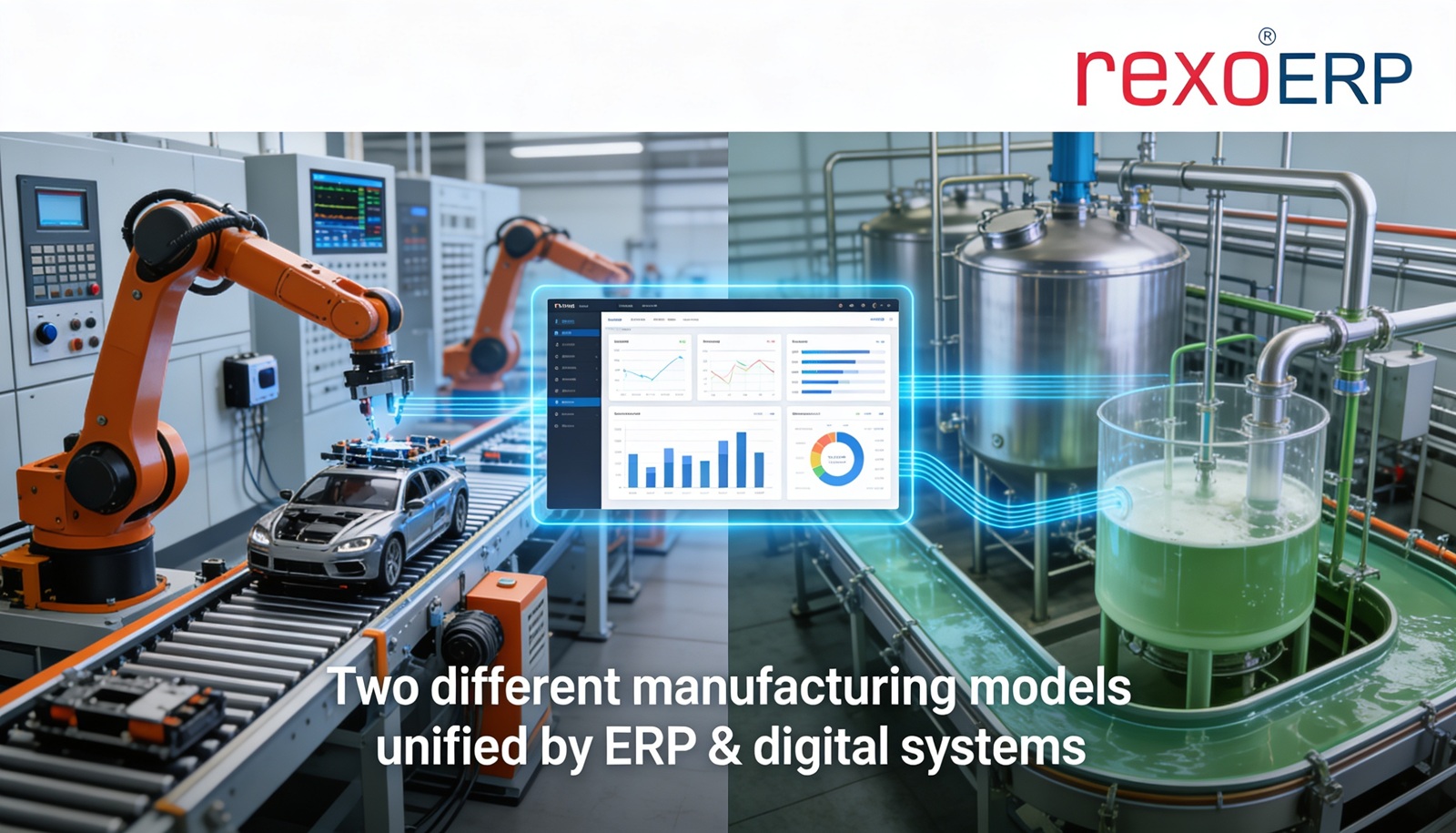
Discrete manufacturing is characterized by the production of individual, separate items. Think of anything you can pick up and count—a bicycle, a laptop, or a medical device. This is the realm of discrete manufacturing definition: where parts are assembled into a whole. On the other hand, process manufacturing deals with batches, liquids, and gases that cannot be disassembled back into their original ingredients.
Discrete Manufacturing vs Process Manufacturing: The Core Differences
When we look at process vs discrete manufacturing, the differences are rooted in the “BOM” (Bill of Materials) versus the “Formula”:
- Discrete Manufacturing: Relies on Assembly. Units are distinct. You use screws, welds, and motors.
- Process Manufacturing: Relies on Blending. Units are continuous. You use tanks, mixers, and heat.
- Disassembly: In discrete manufacturing vs process, you can take a car apart. You cannot take the sugar back out of a baked cookie.
2. Deep Dive: What is Discrete Manufacturing?
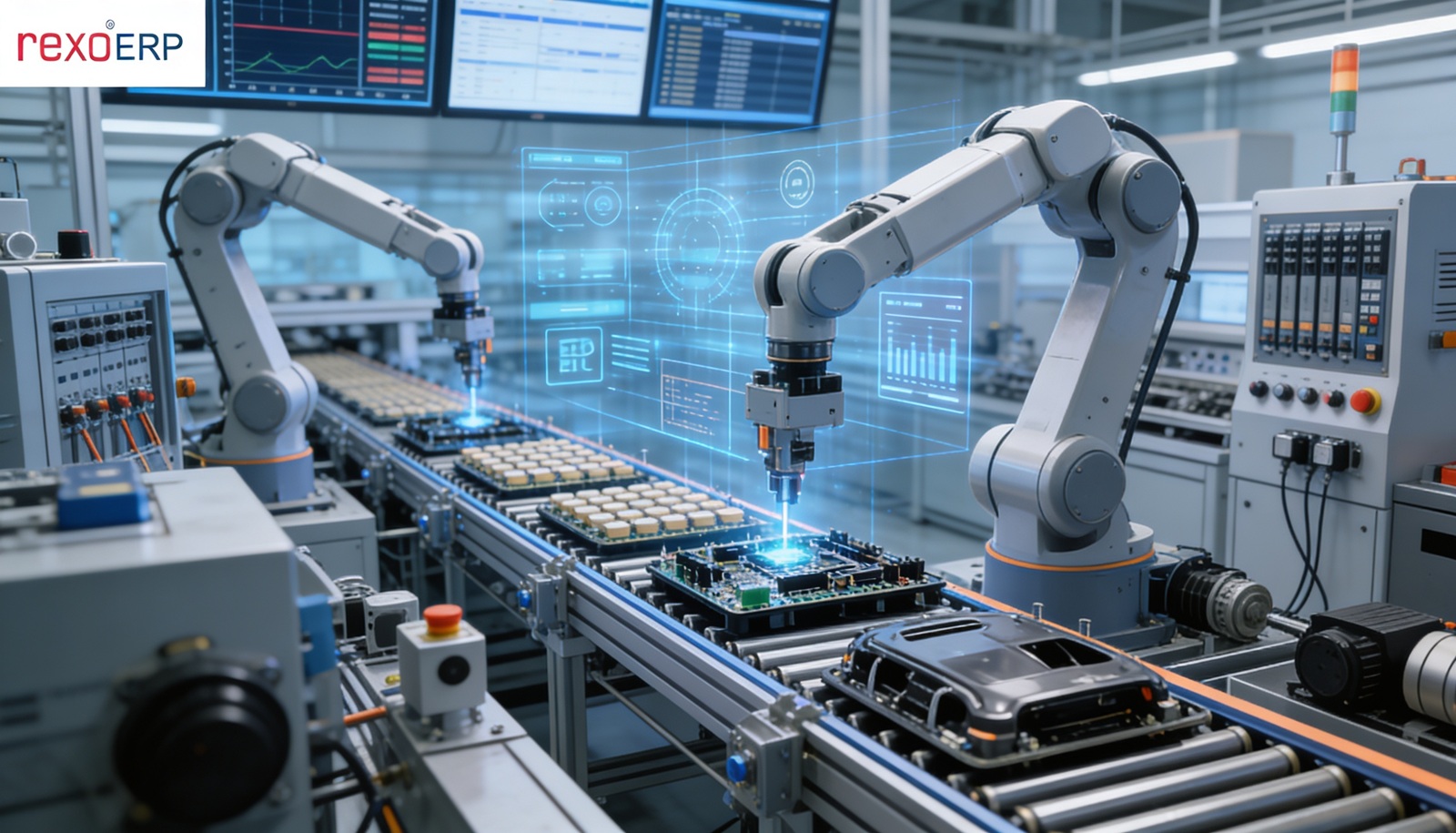
To truly understand the discrete manufacturing vs process manufacturing debate, we must define the discrete side first. What is discrete manufacturing in the modern world? It is a high-precision operation where PLC machines and SCADA systems orchestrate the movement of physical components.
The discrete manufacturing industry classification definition hinges on the “Discrete” nature of the product. Every unit is a separate entity with its own serial number and quality record. This necessitates discrete manufacturing erp systems that can handle massive amounts of data related to individual parts.
Discrete Manufacturing Industry Classification Examples
Common discrete manufacturing industry classification examples include:
- Automotive: Assembling cars from thousands of hardware parts.
- Aerospace: Building planes with Siemens-level precision.
- Electronics: Manufacturing smartphones using high-speed sensors and robotics.
3. Choosing the Right Software: ERP for Discrete Manufacturing
The biggest challenge in the discrete manufacturing vs process world is selecting the right digital tools. A process ERP will fail in a discrete environment, and vice versa. Discrete manufacturing erp systems are designed to manage the complexity of a multi-level BOM.
Why You Need Specialized Discrete Manufacturing ERP Software
In discrete manufacturing, you aren’t just blending ingredients; you are managing a complex supply chain of components. The best erp for discrete manufacturing, such as
Manufacturing ERP Software,
offers features that process-only systems lack:
- BOM Hierarchy: Handling hundreds of sub-assemblies.
- Work Order Management: Tracking the progress of individual units on the floor.
- Engineering Change Control: Updating designs across the discrete manufacturing software suite.
For enterprises that fall under the discrete manufacturing industry classification, having the right discrete manufacturing erp software is the only way to enhance manufacturing efficiency and scale globally.
4. The Floor Level: MES for Discrete Manufacturing
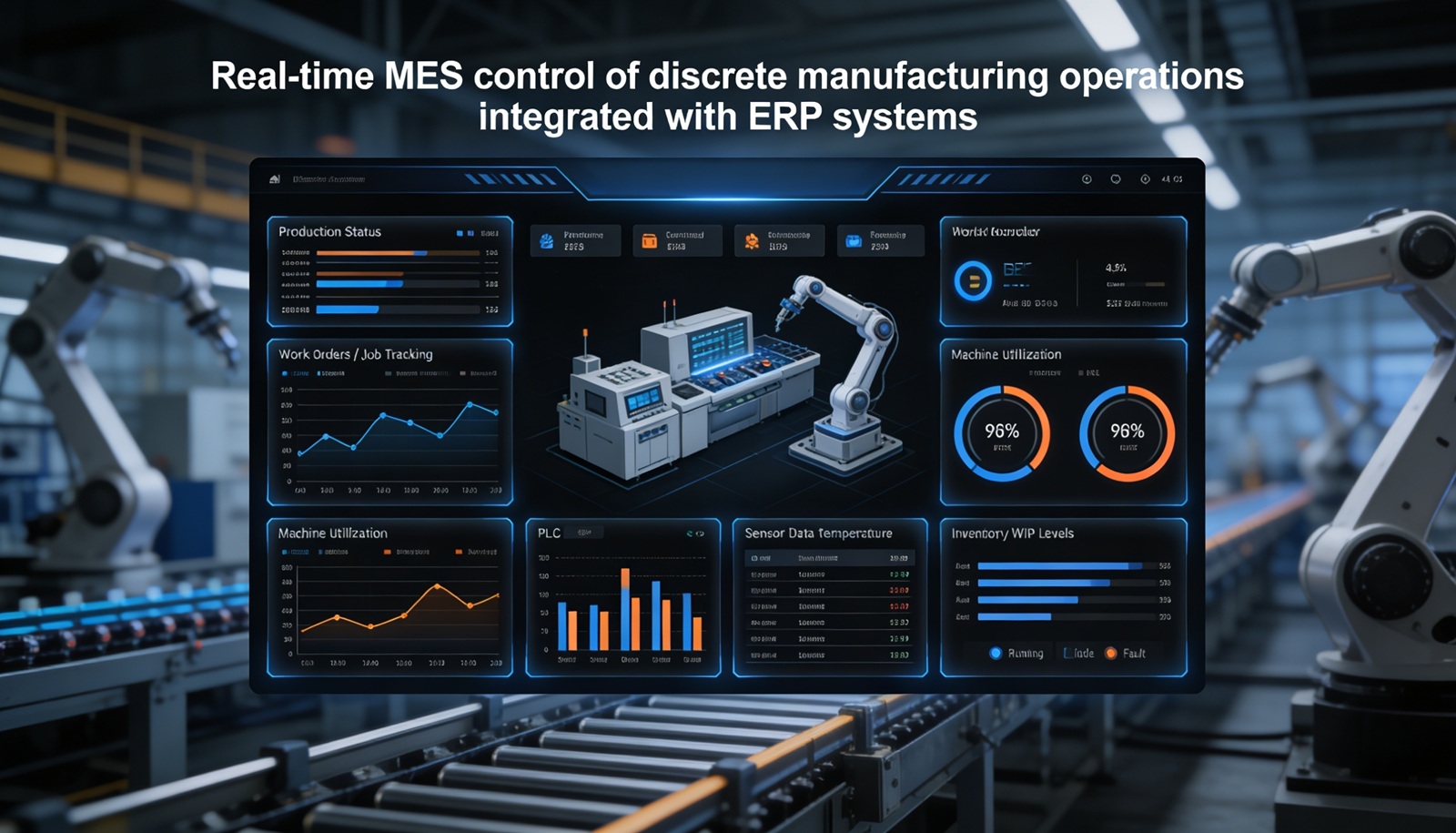
While the ERP handles the business logic, the mes for discrete manufacturing handles the shop floor. In the discrete vs process manufacturing comparison, the MES is where the differences are most visible. In discrete, the MES tracks “Units”; in process, it tracks “Batches.”
The best mes solutions for discrete manufacturing integrate directly with sensors, motors, and PLC machines to provide real-time data. By linking your MES to
Production Planning Software,
you can achieve 100% interfacing synchronization, ensuring that every assembly step is performed correctly.
5. Classification Logic: Discrete Manufacturing Classification Criteria
Not all discrete plants are the same. The discrete manufacturing classification criteria help you identify which model your plant follows, which in turn influences your discrete manufacturing erp choice.
| Criteria | Discrete Model | Software Focus |
|---|---|---|
| Volume | High-Volume / Low-Mix | Automation & Speed |
| Customization | Low-Volume / High-Mix | Traceability & BOM Flexibility |
| Lead Time | MTO (Make to Order) | Scheduling & Supply Chain |
By defining your discrete manufacturing industry classification early, you can avoid the “Generic Software Trap” and implement custom erp solutions that actually work for your specific industrial automation needs.
6. Conclusion: Mastering the Manufacturing Divide
Ultimately, the choice between discrete manufacturing vs process manufacturing defines your company’s DNA. Whether you are assembling complex hardware or blending chemical formulas, success depends on having the right digital backbone. By leveraging
ERP Consulting Services
to implement specialized discrete manufacturing erp systems and mes for discrete manufacturing, you can ensure your operation is ready for the future of Industry 4.0.
Frequently Asked Questions (FAQ)
- Q: Can a single ERP handle both discrete and process manufacturing?
A: Some “Hybrid” systems exist, but they often lack the depth of a specialized discrete manufacturing erp software. - Q: What is the most common example of discrete manufacturing?
A: The automotive industry is the gold standard for discrete manufacturing industry classification examples. - Q: Why is BOM management so critical in discrete vs process manufacturing?
A: Because discrete items are made of distinct parts that must be tracked, while process items are chemical blends.