TL;DR: The Core Distinctions
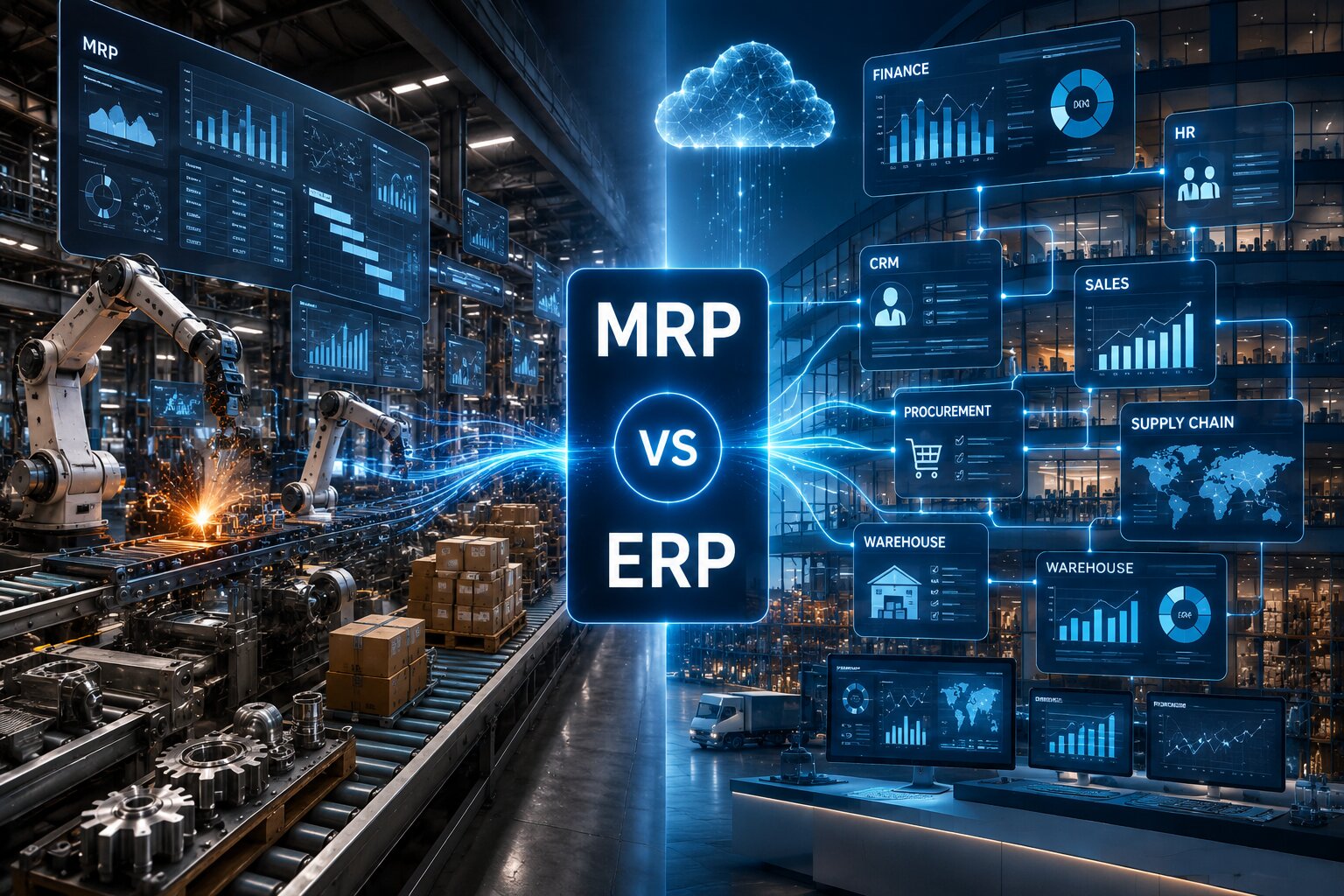
- Material Requirements Planning (MRP): Specialized manufacturing software hyper-focused on production planning, inventory control, and generating the Bill of Materials (BOM). It answers "what," "how much," and "when" materials are needed for production.
- Enterprise Resource Planning (ERP): A comprehensive suite of integrated business software that connects the entire organization. It includes manufacturing but extends to finance management, human resources management, and sales pipeline tracking.
- The Integration Equation: Modern systems often blur the lines. An MRP module in ERP provides manufacturing prowess within a unified ecosystem, enabling profound business process integration.
- The Expansion of Scope: Supply Chain Management (SCM) and Customer Relationship Management (CRM) bring external vendor and customer data into the ERP software fold, achieving total workflow automation.
- The Ultimate Choice: Deciding between an isolated mrp system versus an extensive erp software for business depends entirely on your operational complexity, growth trajectory, and appetite for holistic digital transformation.
Introduction: Navigating the Industrial Software Labyrinth
In the relentless pursuit of operational excellence, manufacturing leaders are perpetually confronted with a critical technological crossroad. The modern industrial landscape demands unprecedented agility, unerring accuracy, and profound visibility across every organizational tier. To achieve this, companies must digitize and synthesize their workflows. Yet, the terminology surrounding these technological solutions often creates an impenetrable fog. At the epicenter of this confusion lies the eternal debate: mrp vs erp. Understanding the nuances, historical context, and functional divergences of these systems is the first crucial step toward genuine digital transformation.
Decades ago, managing a production floor relied on disjointed spreadsheets, physical whiteboards, and localized tribal knowledge. Today, deploying sophisticated business management software is not a luxury; it is the fundamental baseline for survival. Whether a facility is assembling precision aerospace components or mass-producing consumer goods, the requirement to align raw materials with production timelines and customer demand is universal. However, does a company merely need a dedicated mrp system to streamline its shop floor, or does it require the expansive, all-encompassing architecture of an Enterprise Resource Planning ecosystem?
This comprehensive exposition is designed to dissect every granular aspect of erp/mrp systems. We will traverse the historical evolution from localized material planning to global supply chain harmonization. By thoroughly exploring concepts like ERP vs CRM vs SCM comparison, and detailing the intricacies of procurement management and real-time reporting, we will equip you with the definitive knowledge required to architect your organization's technological future.
What is MRP in Manufacturing? A Deep Dive
To fundamentally grasp the difference between ERP and SCM or ERP and MRP, we must first isolate and understand the original progenitor of modern industrial computing. So, What is MRP in manufacturing? Material Requirements Planning is essentially the logistical brain of the manufacturing process. It is a highly specialized piece of software engineered to calculate precisely what raw materials, sub-assemblies, and components are required to manufacture a finished product, determining exactly how many are needed, and calculating precisely when they must be ordered and delivered to meet customer demand.
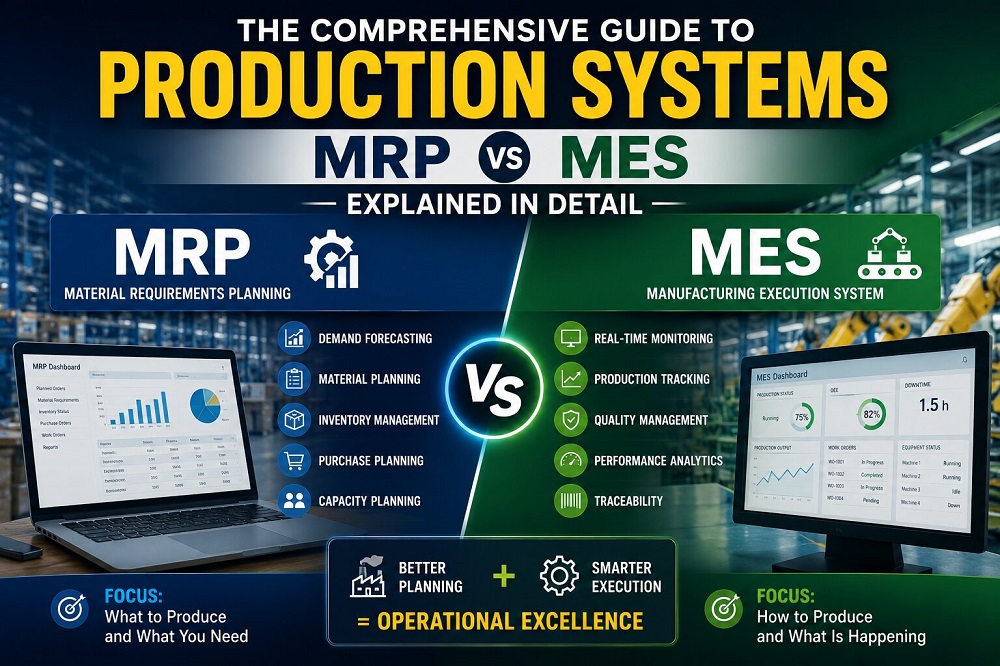
An mrp software solution operates by answering three pivotal questions with mathematical precision: What is needed? How much is needed? When is it needed? It achieves this by triangulating data from three primary inputs. Firstly, the master production schedule, which details the forecasted demand and actual customer orders. Secondly, the Bill of Materials (BOM), which is the exact recipe or structural blueprint required to build a single unit of the final product. Thirdly, the current inventory control data, which accounts for what is already resting in the warehouse or currently in transit.
The Engine of the Shop Floor
When these three data streams converge within mrp systems, the software generates highly actionable outputs. It creates precise purchase orders for procurement teams, detailing exactly when to buy materials to avoid tying up capital in excess stock while simultaneously preventing catastrophic stockouts. Furthermore, it generates detailed work orders for the production floor, guiding production scheduling and informing shop floor control mechanisms.
Advanced iterations, often referred to as MRP II (Manufacturing Resource Planning), extended this logic slightly beyond raw materials to encompass capacity planning. This ensures that not only are the materials available, but the specific machines, workstations, and human labor hours are adequate to meet the production schedule. Without a robust MRP engine, a manufacturing facility is operating blind, highly susceptible to volatile supply chain disruptions and crippling inefficiencies in inventory management.
What is ERP Software? The Unification of the Enterprise
If MRP is the logistical brain of the manufacturing floor, then an Enterprise Resource Planning system is the central nervous system of the entire organization. To answer the question, What is ERP software?, one must look beyond the confines of the factory. An ERP is an integrated suite of applications that manage core business processes in real-time, mediated by software and technology. It acts as a singular, unified repository for all data across every department within a company.
While an MRP is laser-focused on production and materials, ERP software encapsulates everything. It breaks down the traditional silos that plague growing businesses. An ERP includes a robust MRP module in ERP to handle the heavy lifting of production, but it seamlessly connects this manufacturing data to a myriad of other critical functions. This constitutes true cross-department integration.
The Expansive Modules of ERP
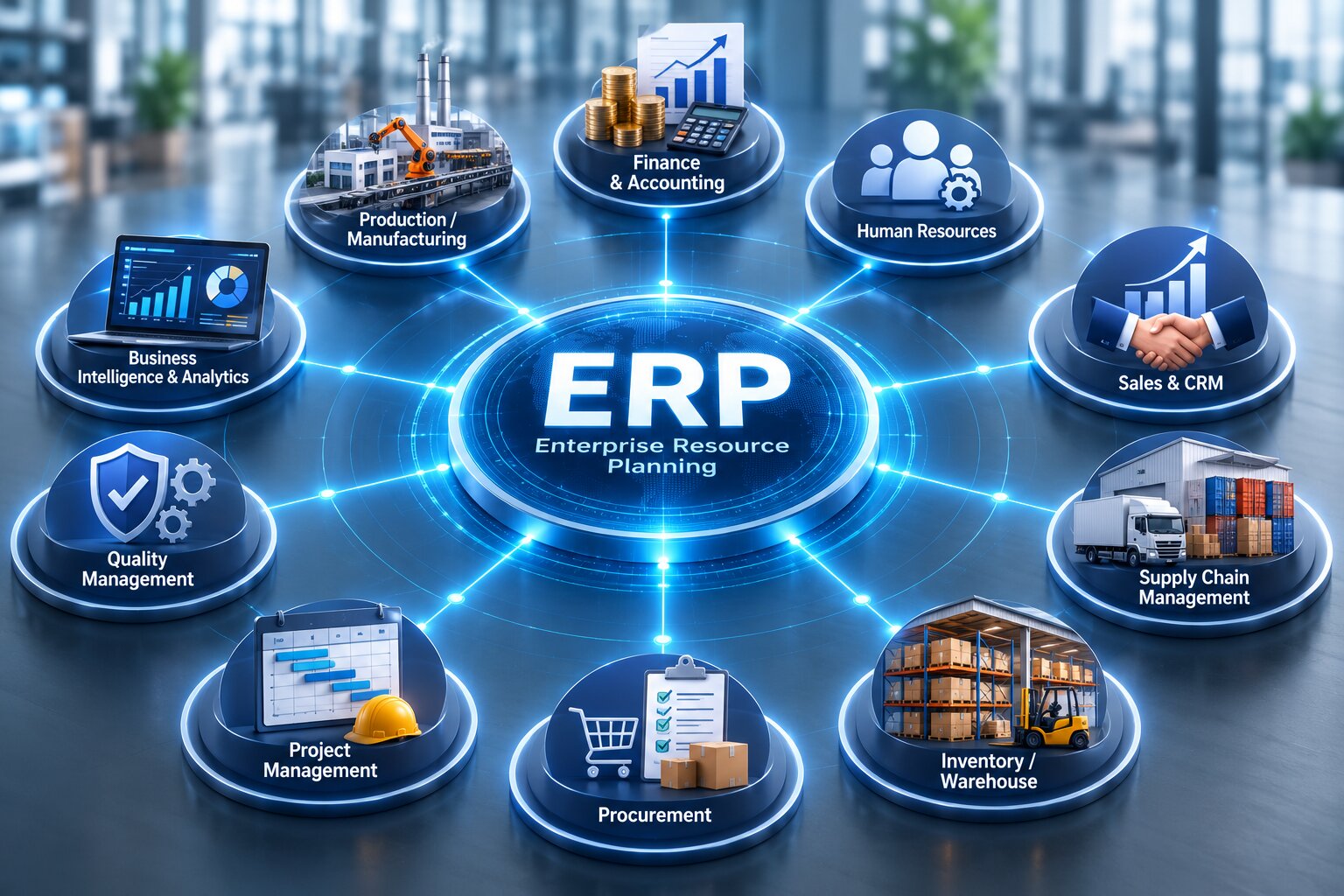
To truly understand ERP vs MRP explained, one must examine the breadth of ERP modules. A fully deployed ERP ecosystem includes sophisticated finance management ledgers, ensuring that every time a raw material is consumed on the shop floor, the financial inventory valuation is updated instantaneously. It includes comprehensive human resources management, tracking employee hours, payroll, and benefits. It encompasses the sales pipeline, allowing customer service representatives to view real-time production statuses to give clients accurate delivery estimates.
The beauty of integrated business software lies in its ability to eliminate redundant data entry. When a sales order is entered, it automatically triggers demand in the MRP module, which in turn flags procurement to issue purchase orders. Once the goods are received, the financial accounts payable ledger is updated. This absolute continuity is the bedrock of modern business process automation and is what makes an ERP an indispensable tool for scaling operations.
The Great Debate: MRP vs ERP
The juxtaposition of mrp vs erp is fundamentally a question of scope and organizational maturity. Many growing manufacturing firms find themselves trapped in a cycle of disjointed software—using a basic accounting package for finances, spreadsheets for inventory control, and perhaps a rudimentary legacy system for production scheduling. As complexity scales, these localized solutions fracture under the weight of disjointed data.
When conducting an ERP software comparison against dedicated MRPs, the initial differentiator is focus. mrp systems are tactical; they solve specific problems related to making physical things. erp mrp systems are strategic; they are designed to give executive leadership a holistic view of the company's health. If your only critical pain point is ensuring you have enough steel to build a chassis next Tuesday, an MRP might suffice. If, however, you need to understand how the fluctuating price of that steel impacts your quarterly profit margins, your cash flow forecasting, and your ability to hire new personnel, you absolutely require enterprise software.
Critical Indicators You Need to Move from MRP to ERP
- Data Silos: Your finance team and your production team are reporting different numbers for inventory valuation.
- Manual Workarounds: Employees spend hours manually exporting data from the MRP into spreadsheets to generate financial reports.
- Customer Blind Spots: The customer support team cannot easily tell a client where their order is in the production queue without calling the shop floor.
- Compliance Risks: Tracking lot numbers and serialized inventory for quality control and regulatory compliance is becoming a logistical nightmare.
- Stunted Growth: Your current software architecture cannot accommodate new product lines, multiple warehouses, or international subsidiaries.
Dissecting the Ecosystem: CRM and SCM Integrations
No discussion of enterprise architecture is complete without introducing the external-facing pillars of modern commerce. When evaluating an ERP vs CRM vs SCM comparison, we must define these crucial acronyms and understand how they interface with the core ERP.
What is CRM Software?
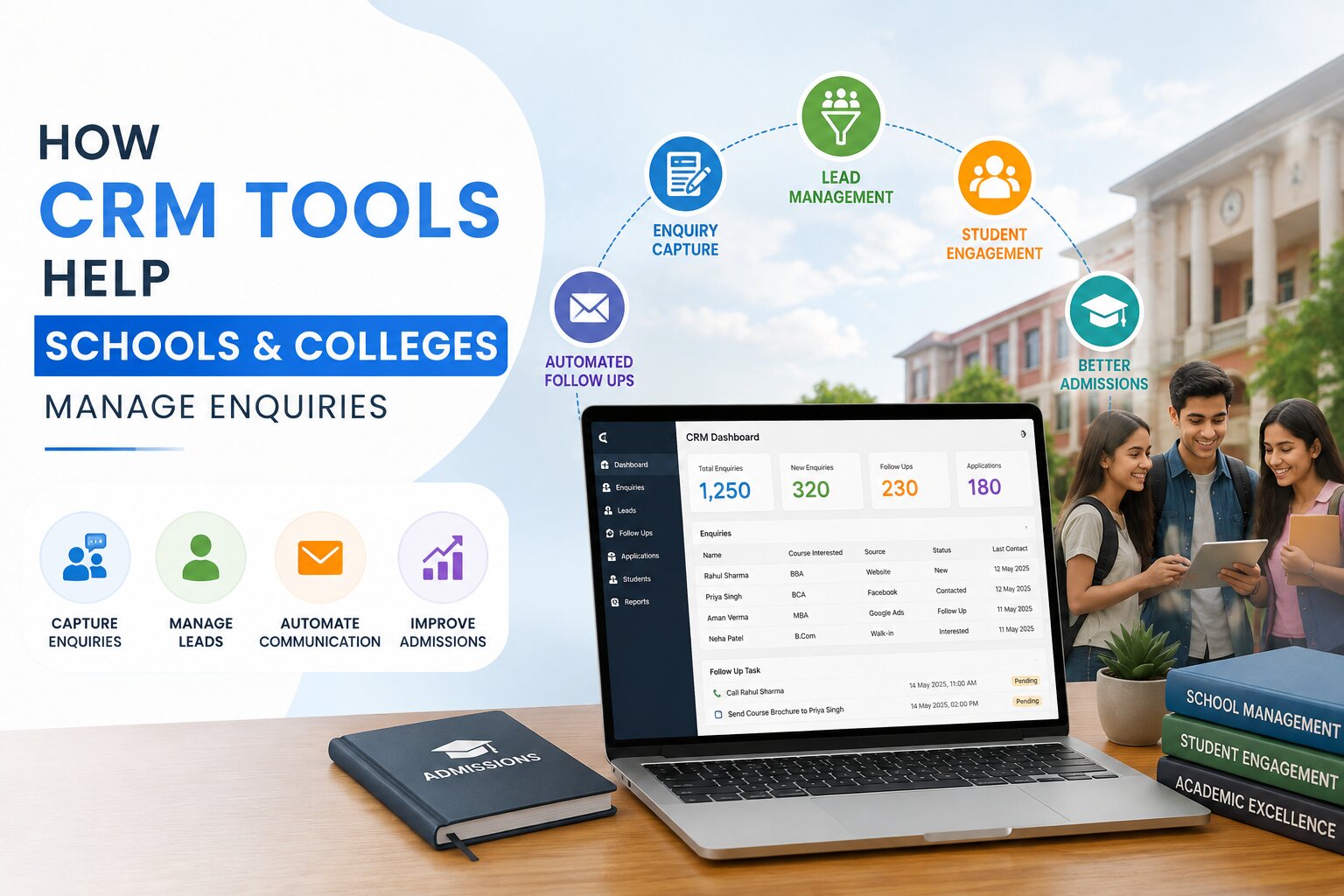
What is CRM software? Customer Relationship Management software is dedicated to managing all your company's relationships and interactions with customers and potential customers. The goal is simple: improve business relationships. A CRM focuses on the sales pipeline, tracking leads, managing marketing automation campaigns, and streamlining customer support ticketing. While an ERP manages the internal execution of an order, the CRM manages the external relationship that generated the order in the first place.
The power of CRM integration with ERP cannot be overstated. When these systems speak to each other seamlessly, a sales representative can close a deal in the CRM, instantly transferring the customer data and order specifications into the ERP. The ERP then schedules production, allocates inventory, and manages the financial invoicing. This eliminates friction and drastically accelerates the order-to-cash cycle.
What is SCM Software?
Conversely, What is SCM software? Supply Chain Management software handles the flow of goods, data, and finances related to a product or service, from the procurement of raw materials to the delivery of the product at its final destination. While an MRP manages the internal requirement of materials, an SCM manages the external network of suppliers, logistics providers, and global distribution channels.
The difference between ERP and SCM often blurs, as many robust ERPs contain strong SCM modules. However, dedicated SCM software provides hyper-advanced tools for demand planning across global networks, optimizing logistics management for complex freight routes, and executing deep supplier management and risk analysis. SCM integration with ERP ensures that the internal production engine is perfectly synchronized with the global flow of materials, minimizing lead times and maximizing supply chain optimization.
Selecting the Best ERP for Manufacturing Companies
The journey of ERP implementation is notoriously complex. Choosing the Best ERP for manufacturing requires a forensic analysis of your unique operational DNA. A system perfectly suited for a process manufacturer mixing chemicals will likely be disastrous for a discrete manufacturer assembling complex machinery.
When evaluating ERP for manufacturing companies, leadership must scrutinize the depth of the manufacturing-specific modules. Does the system handle complex, multi-level Bill of Materials (BOM) routing? Does it offer granular shop floor control, allowing operators to log time and material scrap directly from a tablet on the factory floor? How robust is the capacity planning engine—can it account for machine maintenance schedules and fluctuating labor availability?
Furthermore, the architecture of the deployment is a critical decision point. The industry has seen a massive shift towards Cloud ERP solutions. Cloud deployments drastically reduce the need for on-premise IT infrastructure, offer continuous updates, and provide unparalleled accessibility for remote workforces. However, highly secure industries (like defense contracting) may still require the absolute control of an on-premise enterprise software deployment.
| Feature Category | Standalone MRP Software | Comprehensive ERP Software |
|---|---|---|
| Core Focus | Optimizing manufacturing, materials, and production. | Unifying the entire business across all departments. |
| Financials | Basic cost tracking related to production only. | Full general ledger, Accounts Payable/Receivable, fixed assets. |
| Data Integration | Highly siloed; requires manual data transfer or custom APIs. | Natively integrated; a single source of truth for all data. |
| Sales & CRM | Non-existent; relies entirely on external systems. | Integrated sales management and robust CRM capabilities. |
| Human Resources | Limited to basic labor tracking for production orders. | Full HCM suites: payroll, benefits, recruitment, performance. |
| Implementation | Generally faster and less complex. | Complex, requiring significant change management. |
The Paradigm of Real-Time Reporting and Business Intelligence
Perhaps the most profound advantage of utilizing a unified ERP with CRM and SCM is the unlocking of advanced analytics. In a fragmented software environment, generating an accurate report on company performance requires days of manual data aggregation. By the time the report is compiled, the data is stale.
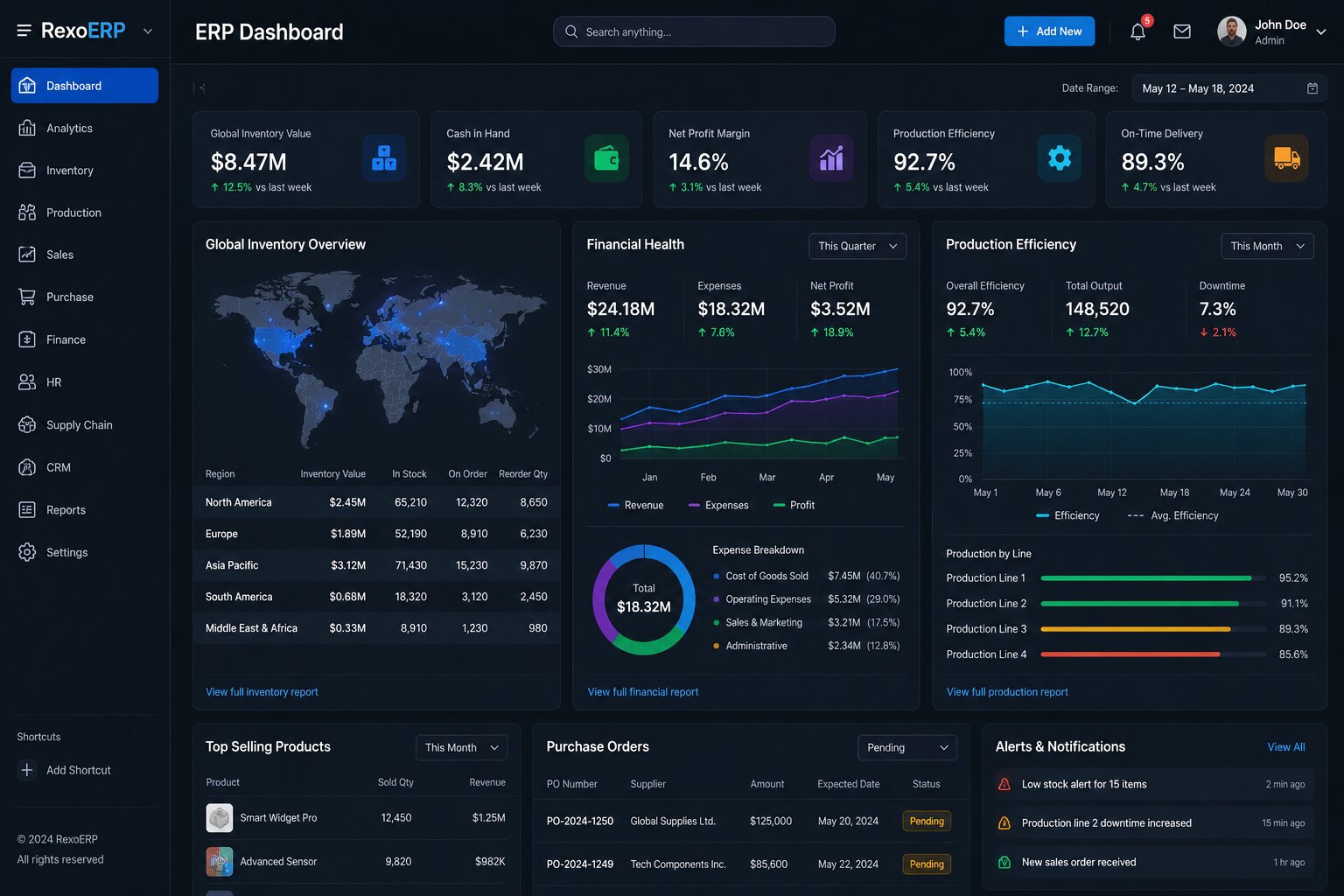
Modern ERP software for business features embedded Business intelligence tools that thrive on real-time reporting. Executives can view dynamic dashboards that display live factory throughput, current inventory valuations across multiple global warehouses, real-time cash flow metrics, and predictive analyses regarding potential supply chain bottlenecks. This level of visibility transforms leadership from a reactive stance—putting out daily fires—to a proactive posture, anticipating market shifts and strategically maneuvering the enterprise.
This visibility extends into ERP for inventory management. Warehouse management modules within an ERP utilize barcode scanning, RFID technology, and automated reorder points to ensure that inventory levels are perpetually optimized. This prevents capital from being trapped in dead stock while guaranteeing that the procurement process is executed with pinpoint accuracy.
The Future: AI, Workflow Automation, and Beyond
As we project into the future of manufacturing software, the static databases of the past are being replaced by dynamic, intelligent engines. Workflow automation is evolving beyond simple trigger-based rules. Machine learning algorithms are beginning to analyze vast swaths of historical production data to optimize the manufacturing planning process automatically.
Predictive maintenance, powered by IoT sensors on the factory floor, communicates directly with the ERP to schedule machine downtime before a catastrophic failure occurs. These advancements are redefining business process integration, creating self-healing supply chains and autonomous production facilities. The line between software and physical machinery is dissolving, creating a truly unified digital enterprise.
Conclusion: Architecting Your Digital Foundation
The discourse surrounding mrp vs erp is not about determining which software is universally "better." It is about aligning your technological infrastructure with your strategic ambitions. A localized mrp system is a powerful tool for controlling a chaotic shop floor. However, an Enterprise Resource Planning system is the foundation upon which global empires are built.
By achieving total cross-department integration, unifying your finance management with your production lines, and seamlessly linking your customer management to your supply chain, you create an organization that is resilient, agile, and fiercely competitive. The initial investment in an ERP implementation is undeniably substantial, both in capital and organizational friction. Yet, the cost of inaction—remaining tethered to obsolete, fragmented systems in a rapidly digitizing world—is ultimately far higher.
Frequently Asked Questions (FAQs)
Can a small manufacturing company survive on just an MRP system? Yes, many small to mid-sized discrete manufacturers operate highly efficiently using dedicated mrp software integrated with a separate, lightweight accounting package. However, as the company scales, adds multiple locations, or requires complex financial consolidation, the limitations of non-integrated systems will necessitate an upgrade to full ERP software. What is the difference between ERP and supply chain management? While there is overlap, ERP and supply chain management differ in scope. An ERP manages all internal business operations (finance, HR, manufacturing). SCM software focuses specifically on the external flow of goods, optimizing logistics, managing a vast network of vendors, and executing complex global demand planning. Modern organizations integrate both for total visibility. Does implementing an ERP guarantee better inventory control? Software alone guarantees nothing. ERP for inventory management provides the ultimate tools (barcode integration, automated tracking, real-time ledgers), but it requires disciplined human processes, accurate initial data migration, and rigorous warehouse management protocols to achieve true inventory optimization. How does CRM integration with ERP benefit the production floor? CRM integration with ERP ensures that the production floor has immediate, accurate visibility into incoming sales demand. This allows for proactive production scheduling and accurate material procurement, preventing last-minute rushes and stockouts while ensuring customer delivery promises are kept. What is Cloud ERP and why is it becoming the standard? Cloud ERP refers to enterprise software hosted on remote vendor servers and accessed via the internet, rather than installed locally on company hardware. It is becoming standard due to lower upfront infrastructure costs, rapid deployment times, seamless automatic updates, and the ability to access critical business data securely from anywhere in the world.